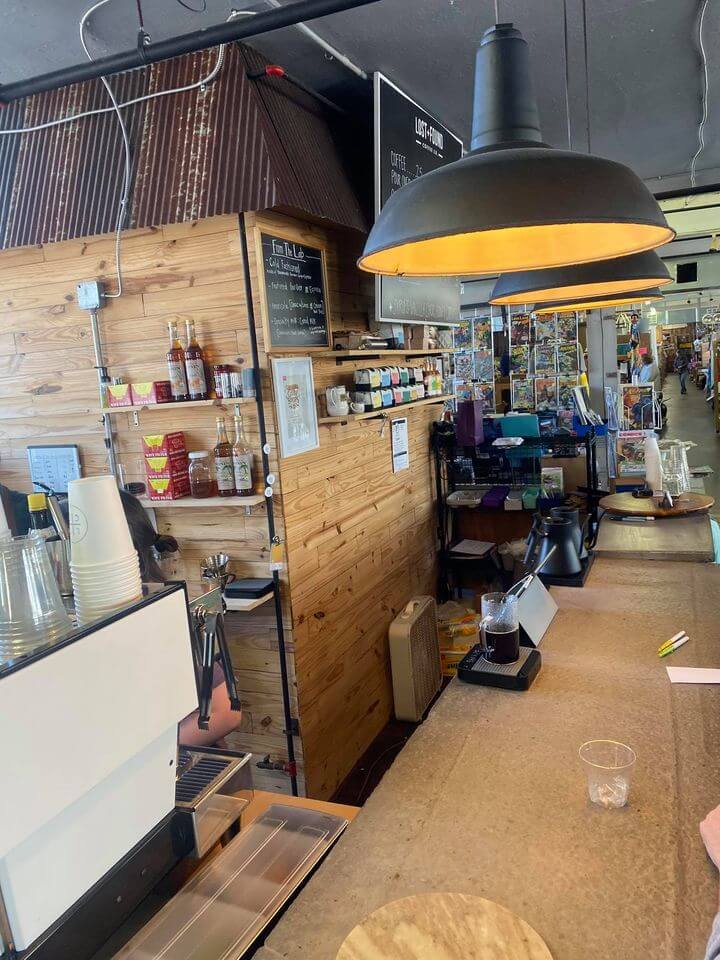
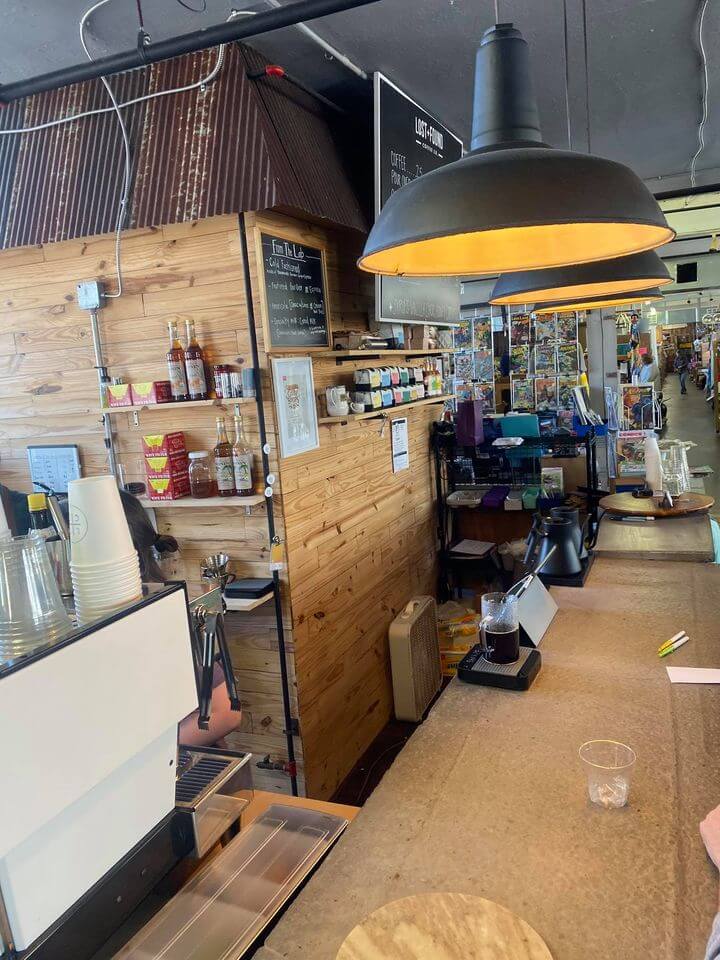
Lost+Found Coffee Company @ 248 South Green Street, Tupelo,MS. inside Relics in Downtown Tupelo. Open Monday through Saturday from 10:00am till 6:00pm.
With most any restaurant or coffee house, it’s a balance between atmosphere, menu, and know how. For a coffee shop, Lost & Found has it going on!
You could spend the better part of a day just strolling through both floors of the antique building looking at all the treasures. When your ready for a coffee break, the knowledgeable baristas can help you choose the perfect pick me up!
They have everything from a classic cup of joe to the creamiest creation you could imagine! From pour overs to cold brews. From lattes, mochas, to cappuccino’s, Lost & Found Coffee Company has got ya covered!
So the next time you want to hunt for lost treasures, or find the perfect cup of coffee, Lost & Found Coffee Company has got ya covered! See y’all there!
Visit my blog for events, contests, new restaurants, LOCAL Favorites, and their FAMOUS foods!
Help us grow our community @ Eating Out With Jeff Jones * visit our page * Click community * Invite friends * Like and share this post
Message me If you would like to have your restaurant, menu, and favorite foods featured in my blog. Over 18,000 local Foodies would love to see what you have to offer!
Do you thrive on the unexpected? Are you waiting for the next fire to crop up?
Have you ever noticed that you can plan something so intricately and you are still going to catch the glitches when life throws you a curve ball? It is one of the beauties of life that we can never prepare for. The unexpected. The only difference is our response to the unexpected. Do we have a knee jerk reaction that finds us swerving to gain back control of our life? Or do we instead just go with the flow and decide to embrace the scenic route life decided to take us on? Our response to life can cause us more stress or we can just enjoy it for what it is in that moment of time. I used to thrive on the unexpected. It was part of my career for many years. The never knowing what “fire” was going to sprout up that day and how I was going to need to put it out. Even this week as we launched our newest book in my publishing company. I thought I had it all planned out only to run into major “hiccups” within 72 hours of the launch. I could either stress out or take it in stride.
Slow and Steady
As my dad retired I watched him take a different approach to life than I had ever seen him take before. I mean, all you have to do is climb up in the cab of his king ranch Ford pick-up and see he is a changed man. He drives slower than anyone should even be allowed to drive out on the roads these days. He knows how to drive, so don’t go yelling at him next time you are stuck behind him. Trust me, my mom does enough yelling for all of us at him about that! He just takes life these days. His sentiments are that he lived in the fast lane his whole life. Rushing to be on time to work, rushing to come home to his family, the constant busy we get entangled with as adults…now, he doesn’t have to be busy and he is going to enjoy that. Truth is, I can’t even be mad at him for that. Now that I am an adult out here rushing from one thing to the next, I totally could use some driving twenty miles per hour in my life some days. Took me getting to nearly forty to even be able to say that though.
The lesson in his wisdom can be heard by all. Some things we lose it over won’t even amount to anything five years from now, yet we gave them so much energy in the moment. All the things we think are so important that we must do and do now. Most will not really matter years from now, yet we poured our soul into them. What would change if we took the time to just enjoy life? To just flow with things as they happened? When hit with something we didn’t expect, we embraced it instead of fighting it? What would happen? I dare say we might have more peace? I probably would be a lot calmer. I probably wouldn’t lose my temper near as much. I probably wouldn’t have anxiety or stress on the daily. I would probably take time to enjoy life more. I certainly wouldn’t yell at the slow driver in front of me.
What about you? Next time you get behind someone driving slowly…take back the name calling and curse words. Maybe take back all of the assumptions that they don’t know how to drive. Maybe use it as a reminder to take a moment, roll down your window, soak in the sunshine. I can promise you that wherever the heck you are going, you will still get there. Maybe that person figured out life and you can use their wisdom too. If they are driving a blue king ranch Ford truck, I can assure you that he is just enjoying his day and he would want you to enjoy yours too. Matter of fact, I wish I had listened to his wisdom a lot more in my earlier days instead of waiting until now.
Here is a plain, searchable text version (most other versions we found were Images or PDF files) of City Of Tupelo Executive Order 20-018. Effective Monday June 29th at 6:00 PM
The following Local Executive Order further amends and supplements all previous Local Executive Orders and its Emergency Proclamation and Resolution adopted by the City of Tupelo, Mississippi, pertaining to COVID-19. All provisions of previous local orders and proclamations shall remain in full force and effect.
LOCAL EXECUTIVE ORDER 20-018
The White House and CDC guidelines state the criteria for reopening up America should be based on data driven conditions within each region or state before proceeding to the next phased opening. Data should be based on symptoms, cases, and hospitals. Based on cases alone, there must be a downward trajectory of documented cases within a 14-day period or a downward trajectory of positive tests as a percent of total tests within a 14-day period. There has been no such downward trajectory in the documented cases in Lee County since May 18, 2020.
Hospital numbers are not always readily available to policymakers; however, from information that has been maintained and communicated to the City of Tupelo, the Northeast Mississippi Medical Center is near or at their capacity for treating COVID-19 inpatients over the past two weeks without reopening additional areas for treating COVID-19 patients. The City of Tupelo is experiencing an increase in the number of cases of COVID-19. The case count 45 days prior to the date of this executive order was 77 cases. That number increased within 15 days to 107, and today, the number is 429 cases. The City of Tupelo is experiencing increases of 11.7 cases a day. This is not in conformity with the guidelines provided of a downward trajectory of positive tests. By any metric available, the City of Tupelo may not continue to the next phase of reopening.
Governor Tate Reeves in his Executive Order No. 1492(1)(i)(1) authorizes the City of Tupelo to implement more restrictive measures than currently in place for other Mississippians to facilitate preventative measures against COVID-19 thereby creating the downward trajectory necessary for reopening.
That the Tupelo Economic Recovery Task Force and North Mississippi Medical Center have formally requested that the City of Tupelo adopt a face covering policy.
In an effort to support the Northeast Mississippi Health System in their response to COVID-19 and to strive to keep the City of Tupelo’s economy remaining open for business, effective at 6:00 a.m. on Monday, June 29, 2020, all persons who are present within the jurisdiction of the City of Tupelo shall wear a clean face covering any time they are, or will be, in contact with other people in indoor public or business spaces where it is not possible to maintain social distance. While wearing the face covering, it is essential to still maintain social distance being the best defense against the spread of COVID-19. The intent of this executive order is to encourage voluntary compliance with the requirements established herein by the businesses and persons within the jurisdiction of the City of Tupelo.
It is recommended that all indoor public or business spaces require persons to wear a face covering for entry. Upon entry, social distancing and activities shall follow guidelines of the City of Tupelo and the Governor’s executive orders pertaining to particular businesses and business activity.
Persons shall properly wear face coverings ensuring the face covering covers the mouth and nose,
1. Signage should be posted by entrances to businesses stating the face covering requirement for entry. (Available for download at www.tupeloms.gov).
2. A patron located inside an indoor public or business space without a face covering will be asked to leave by the business owners if the patron is unwilling to come into compliance with wearing a face covering
3. Face coverings are not required for:
a. People whose religious beliefs prevent them from wearing a face covering. b. Those who cannot wear a face covering due to a medical or behavioral condition. c. Restaurant patrons while dining. d. Private, individual offices or offices with fewer than ten (10) employees. e. Other settings where it is not practical or feasible to wear a face covering, including when obtaining or rendering goods or services, such as receipt of dental services or swimming. f. Banks, gyms, or spaces with physical barrier partitions which prohibit contact between the customer(s) and employee. g. Small offices where the public does not interact with the employer. h. Children under twelve (12). i. That upon the formulation of an articulable safety plan which meets the goals of this
Executive Order businesses may seek an exemption by email at covid@tupeloms.gov
FACE COVERINGS DO NOT HAVE TO BE MEDICAL MASKS OR N95 MASKS. A BANDANA, SCARF, T–SHIRT, HOME–MADE MASKS, ETC. MAY BE USED. THEY MUST PROPERLY COVER BOTH A PERSON‘S MOUTH AND NOSE.
Those businesses that are subject to regulatory oversight of a separate state or federal agency shall follow the guidelines of said agency or regulating body if there is a conflict with this Executive Order.
Additional information can be found at www.tupeloms.gov COVID-19 information landing page.
Pursuant to Miss. Code Anno. 833-15-17(d)(1972 as amended), this Local Executive Order shall remain in full effect under these terms until reviewed, approved or disapproved at the first regular meeting following such Local Executive Order or at a special meeting legally called for such a review.
The City of Tupelo reserves its authority to respond to local conditions as necessary to protect the health, safety, and welfare of its citizens.
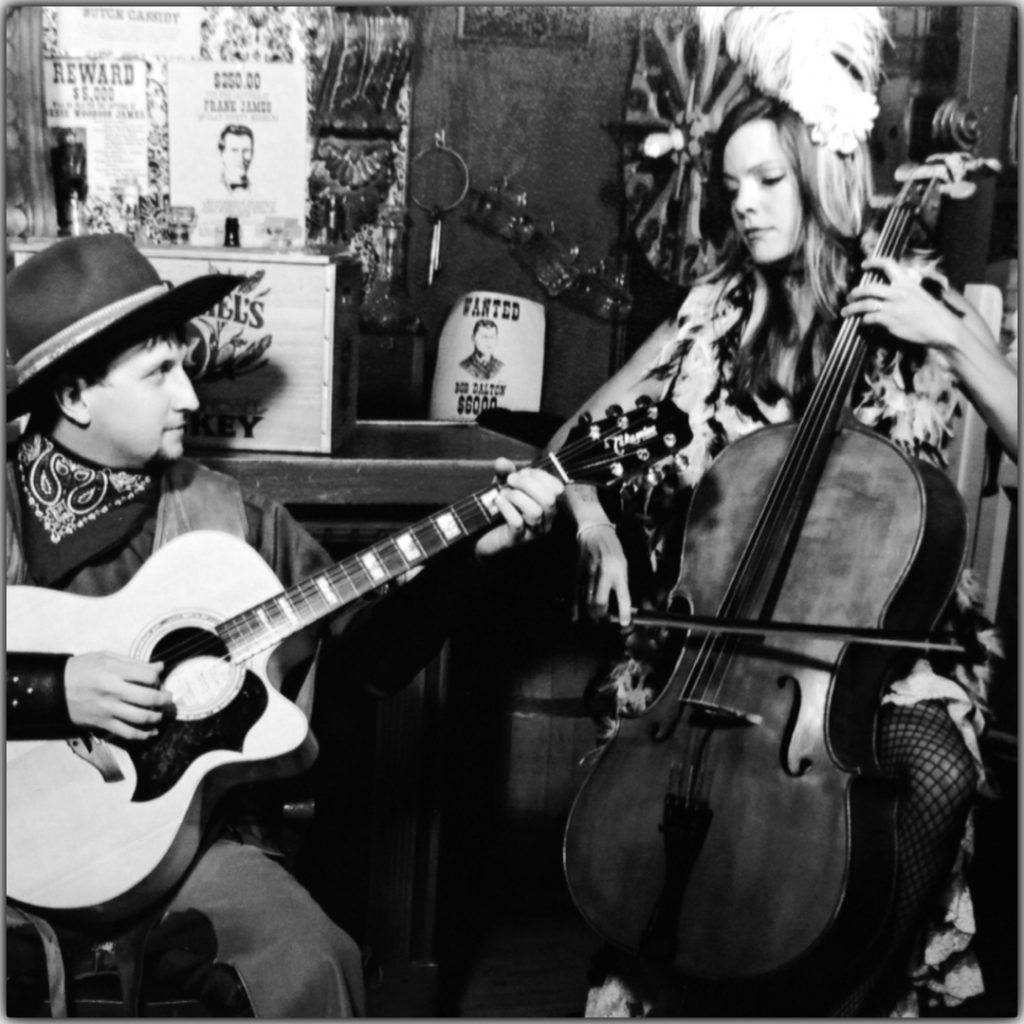
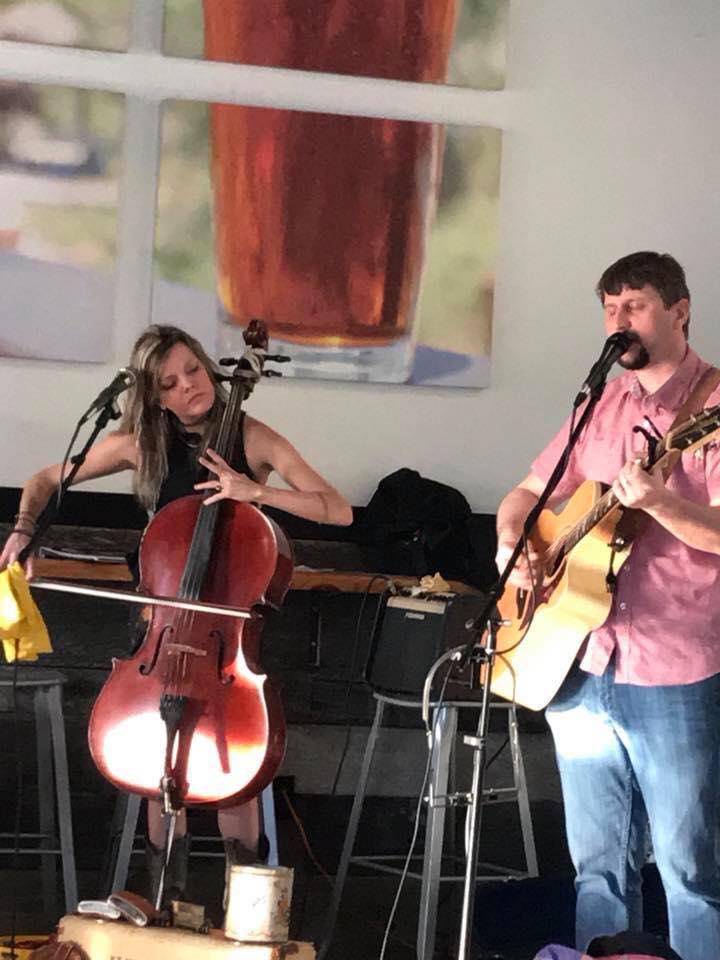
Honeyboy and Boots are a husband and wife, guitar and cello, duo with a unique style that is all their own. Their sound embodies Americana, traditional folk, alt country, and blues with harmonies and a hint of classical notes.
Drew Blackwell, a true Southerner raised in the heart of the black prairie in Mississippi. First picked up the guitar at fourteen, he was greatly influenced by his Uncle Doug who taught him old country standards and folk classics. Later on in high school, he was mentored and inspired to write (and feel) the blues by Alabama blues artist Willie King. (Willie King is credited for bringing together the band The Old Memphis Kings.)
Drew has placed 3rd in the 2019 Mississippi Songwriter of the Year contest with his song “Waiting on A Friend” and made it to the semi finalist round on the 2019 International Songwriting Competition with his song “Accidental Hipster.”
Honeyboy (Drew) can also be found belting out those blues notes as the lead vocalist for the Old Memphis Kings and begins everyday with a hot cup of black coffee!
Courtney Blackwell (Kinzer) grew up in Washington State and comes from a talented musical family. She began playing cello at the age of three taking lessons from the cello bass professor Bill Wharton at the University of Idaho. Her mother was most influential in her progression of technique, tone quality, and ear training. Since traveling around much of the South, she has enjoyed focusing on the variety of ways the cello is used in ensembles. When she plays, you will feel those groovy bass lines making way to soaring leads create an emotional and magical connection between you and her music.
Courtney enjoys working in the studio, collaborating with artists and continuing to challenge the way cello is expressed.
They have opened for such acts as Verlon Thompson, The Josh Abbott Band, Cary Hudson (of Blue Mountain), and Rising Appalachia.
Honeyboy And Boots have performed at a variety of venues and festivals throughout the southeast, including the 2015 Pilgrimage Fest in Franklin, TN; Musicians Corner in Nashville; the Mississippi Songwriters Festival (2015-2018); and the Black Warrior Songwriting Fest in Tuscaloosa, AL (2018-2019). They also came in 2nd place at the 2015 Gulf Coast Songwriters Shootout in Orange Beach, FL.
They have two albums, Mississippi Duo and Waiting On a Song, which are available on their website, iTunes, Amazon, and CD Baby.
The duo also just released their fourth recording: a seven-song EP called Picture On The Wall, which was recorded with Anthony Crawford (Williesugar Capps, Sugarcane Jane, Neil Young). It is now available on Spotify, Itunes, Google Music, and CD Baby.
Who or what would you say has been the greatest influence on your music?
My Uncle Doug, because he began to teach me guitar and introduced me to a lot of great older country music.
Favorite song you’ve composed or performed and why?
“We Played On” because it’s about our family reunions, where we would sit around and play guitar and share songs.
If you could meet any artist, living or dead, which would you choose and why?
Probably Willie Nelson. He’s my all time favorite.
Most embarrassing thing ever to happen at a gig?
A guy fell on top of me while I was performing. I was sitting down. He busted a big hole in my guitar.
What was the most significant thing to happen to you in the course of your music?
Getting to perform at Musicians Corner in downtown Nashville. Probably the biggest crowd we’ve ever been in front of.
If music were not part of your life, what else would you prefer to be doing?
I don’t know, maybe fishing or golf.
Is there another band or artist(s) you’d like to recommend to our readers who you feel deserves attention?
Our friends, Sugarcane Jane. They are a husband/wife duo from the Gulf Shores area. Great people and great artist.
Audio articles are automated for accessibility. Humans wrote and edited the story; however, this audio has not been reviewed for accuracy and may contain errors. Read more about how we use AI to increase access to our reporting.
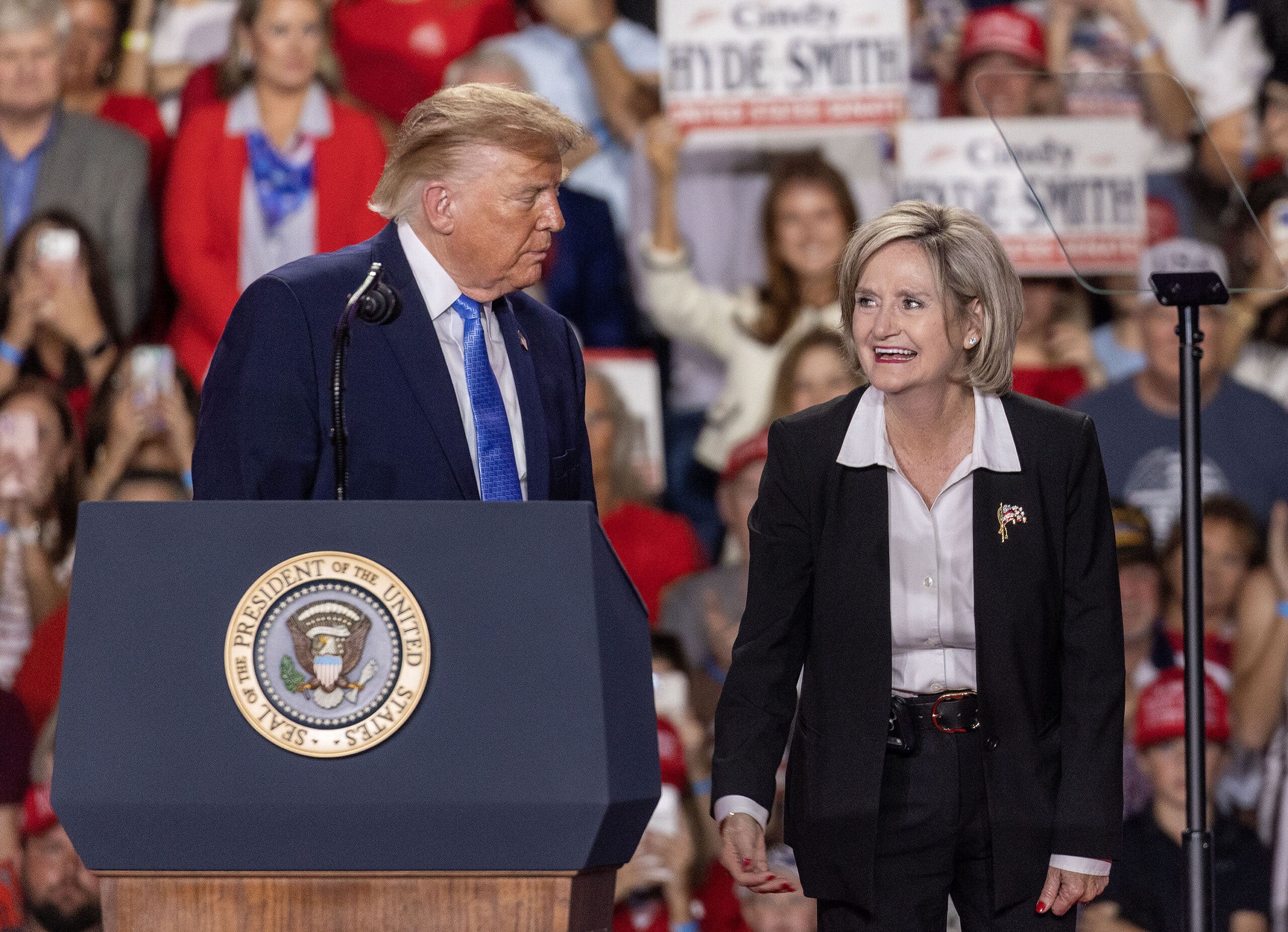
CORINTH – President Donald Trump rallied for Republican Sen. Cindy Hyde-Smith in Mississippi on Monday, urging his supporters not to take chances by staying home and allowing a potential midterm upset in a state he won handily.
As Trump’s approval ratings have cratered amid backlash to soaring consumer prices and an unpopular war in Iran, Democrats have grown hopeful that their nominee in Mississippi, Scott Colom, might flip a seat in what has been a Republican stronghold. Both national parties are sinking money and resources into the race in the homestretch, and national Democratic players have filed into Mississippi to campaign for Colom.
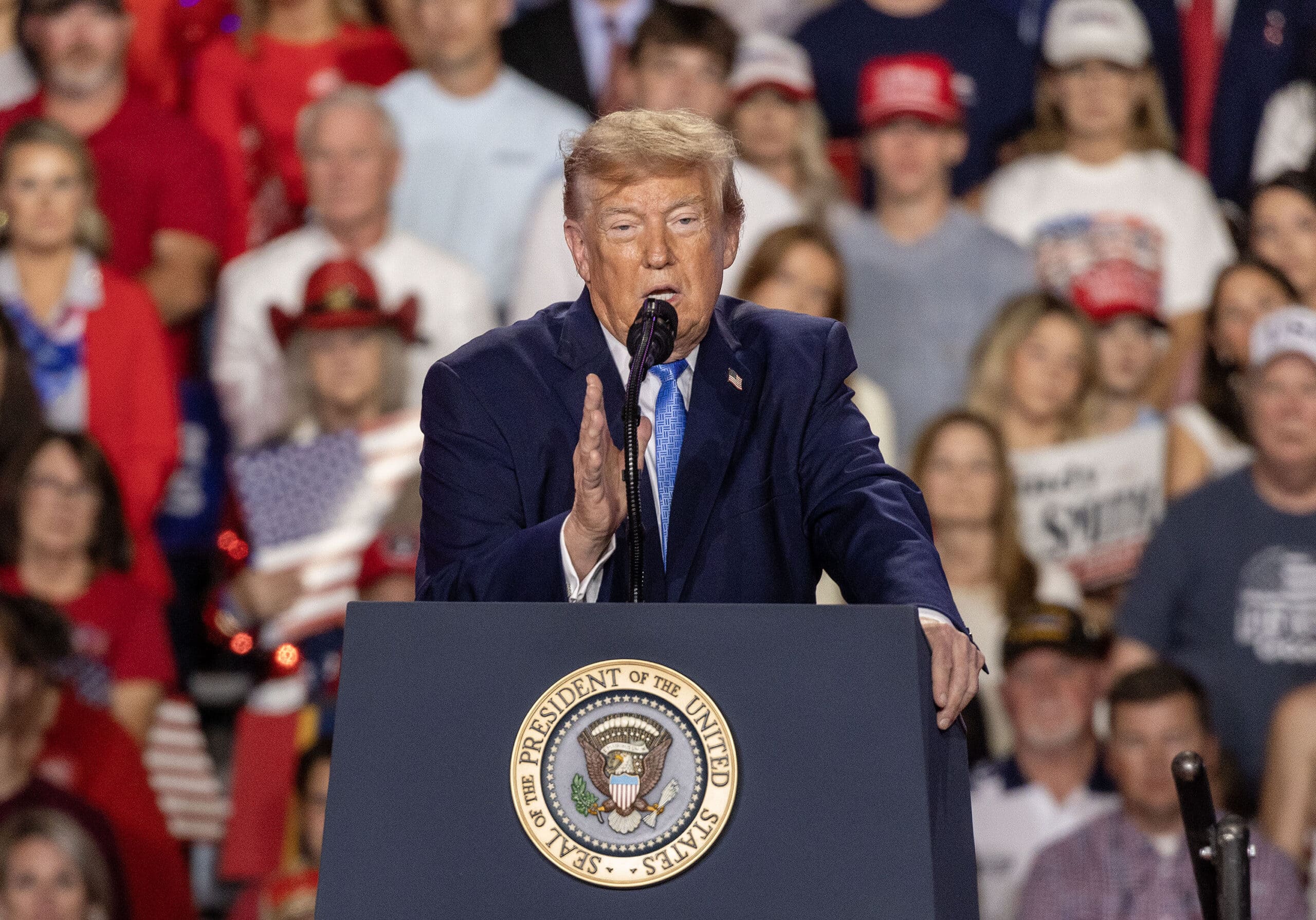
President Donald Trump takes the stage during his rally at the Crossroads Arena in Corinth on Monday, Oct. 26, 2026. Credit: Eric Shelton/Mississippi Today
Trump arrived in the state three days after his 2024 presidential campaign opponent, former Vice President Kamala Harris, hosted a rally for Colom in Columbus.
At Crossroads Arena in the rural northeast Mississippi town of Corinth, Trump told an energized crowd that he had taken notice of the state’s heated Senate race.
“I’m here because Cindy is doing great, but I just have to make sure,” Trump said. “I can’t take a chance.”
The event marks Trump’s first rally in Mississippi since 2019, when he came to Tupelo, a town just over 50 miles away whose name and location the president couldn’t remember on Monday.
“We did a rally in the north or the south, I don’t know where the hell it was,” Trump said.
Trump has won the state three times, but with the midterm elections eight days away, he acknowledged that Republicans could be in for a rough night. The president asked voters to pretend he was on the ballot, hoping to turn out his loyal supporters who don’t always bother to vote in non-presidential elections.
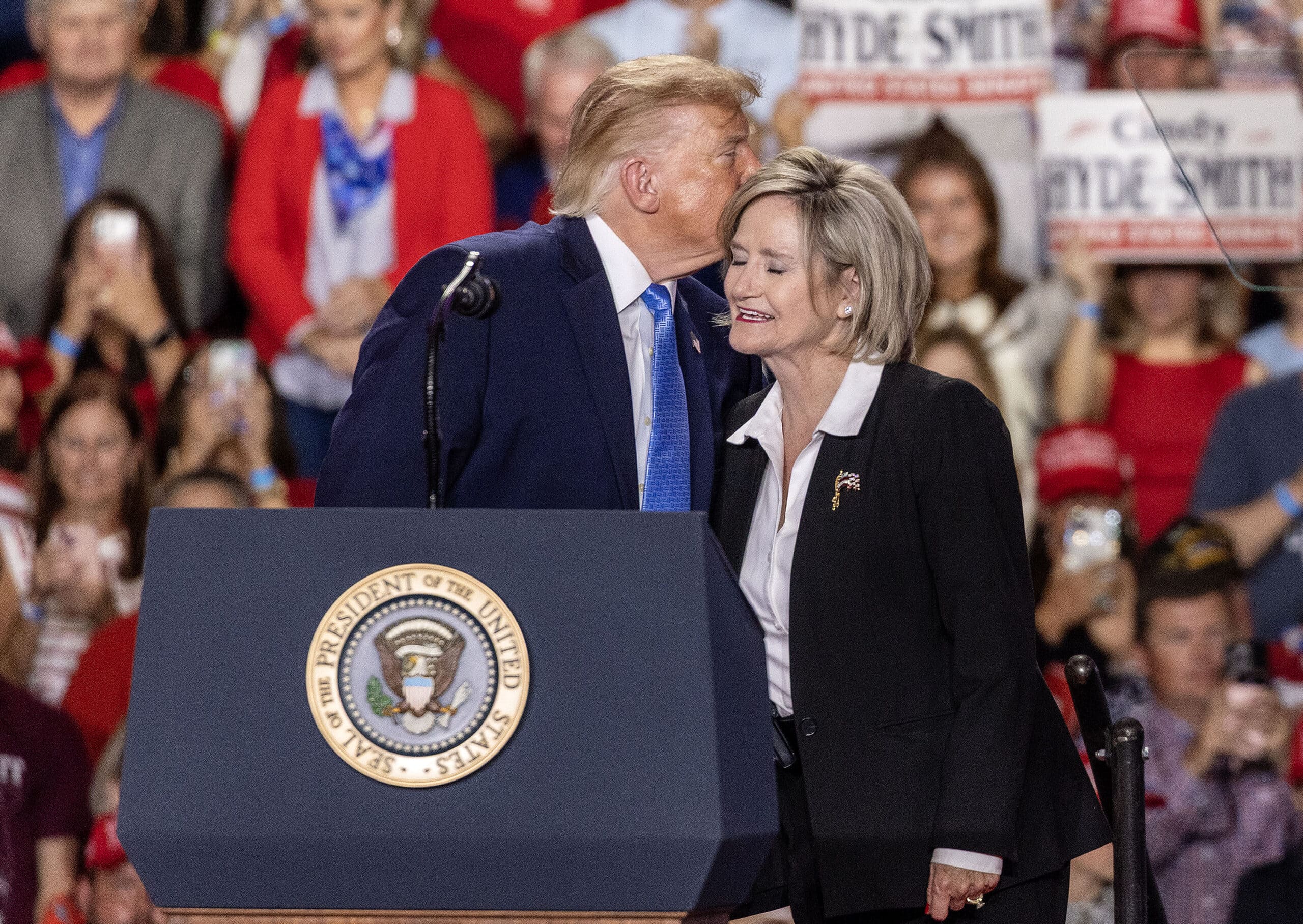
President Donald Trump embraces Sen. Cindy Hyde-Smith during his rally at the Crossroads Arena in Corinth on Monday, Oct. 26, 2026.Credit: Eric Shelton/Mississippi Today
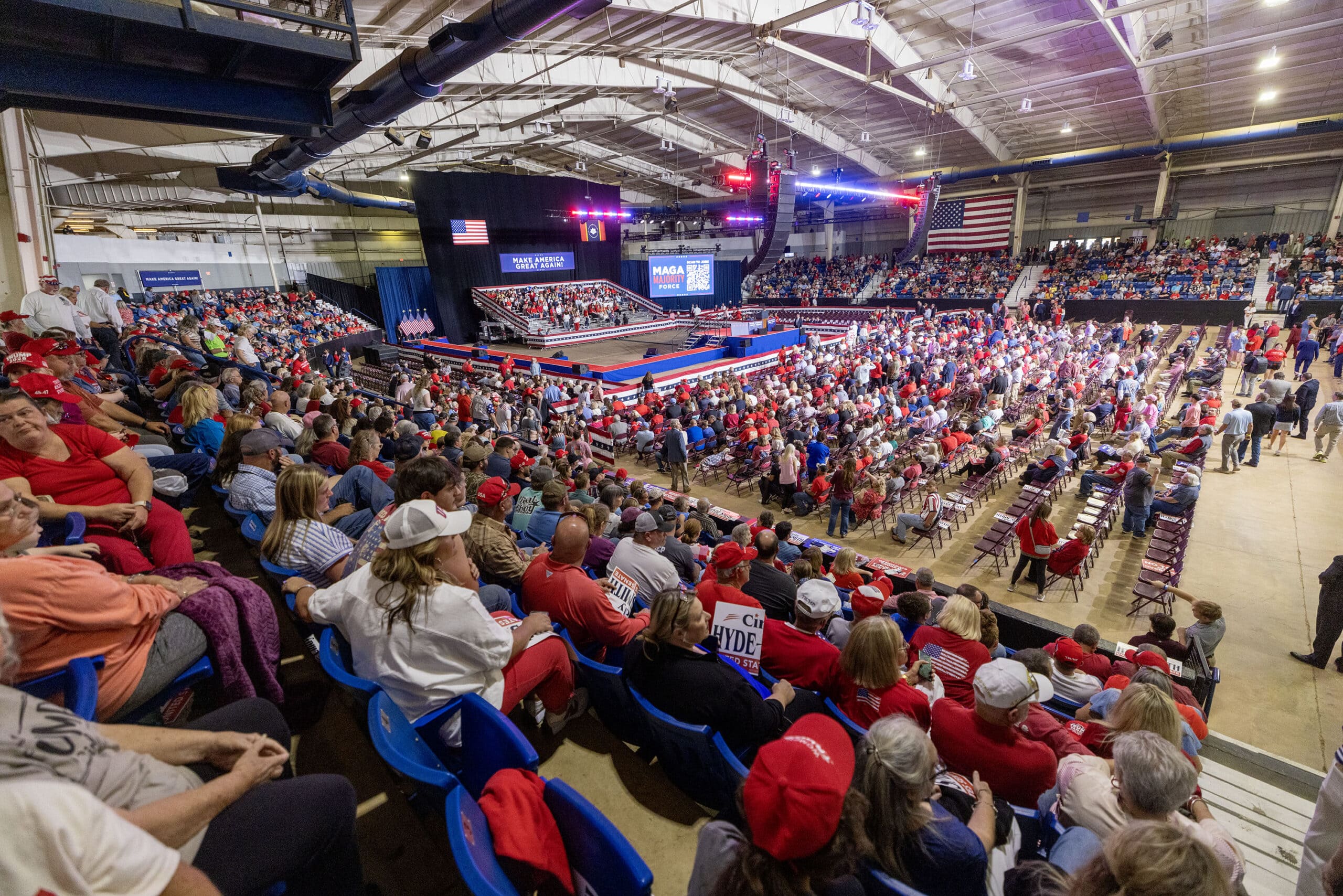
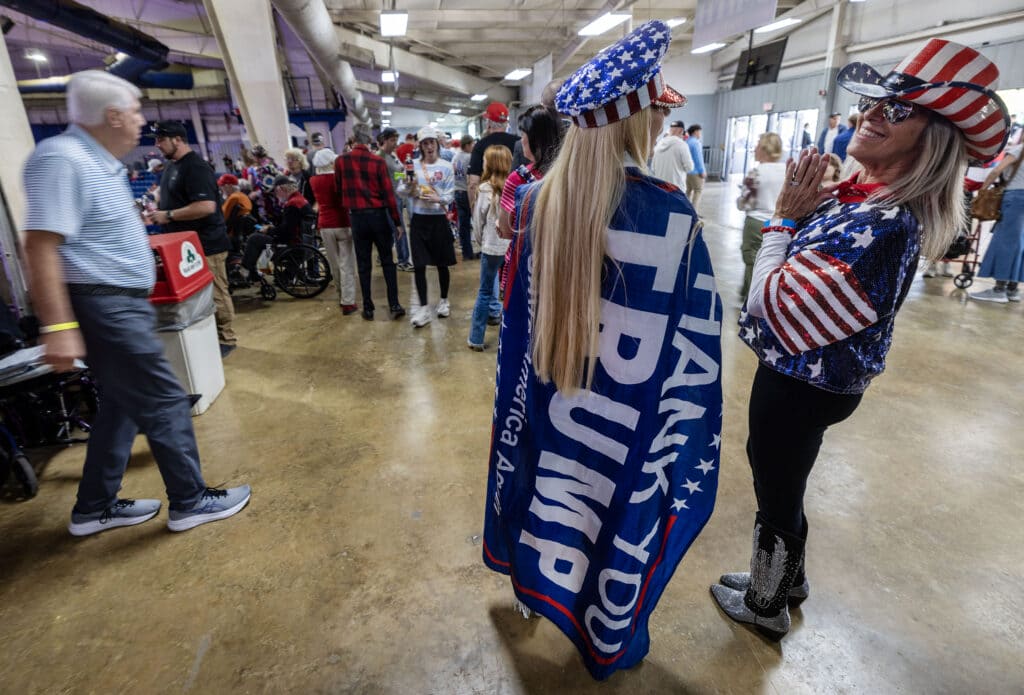
Supporters gather for President Donald Trump’s rally at the Crossroads Arena in Corinth on Monday, Oct. 26, 2026.Credit: Eric Shelton/Mississippi Today
Tyson Robinson, 10, adjusts his hat as he prepares for President Donald Trump’s rally at the Crossroads Arena in Corinth on Monday, Oct. 26, 2026.Credit: Eric Shelton/Mississippi Today
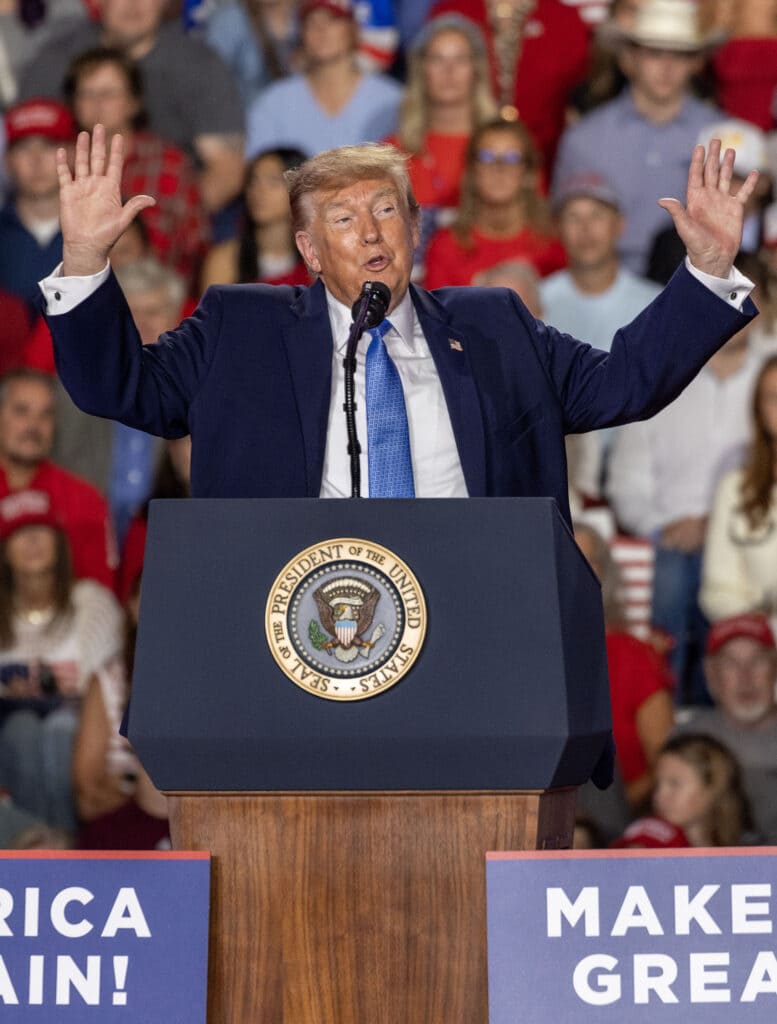
President Donald Trump speaks during his rally at the Crossroads Arena in Corinth on Monday, Oct. 26, 2026.Credit: Eric Shelton/Mississippi Today
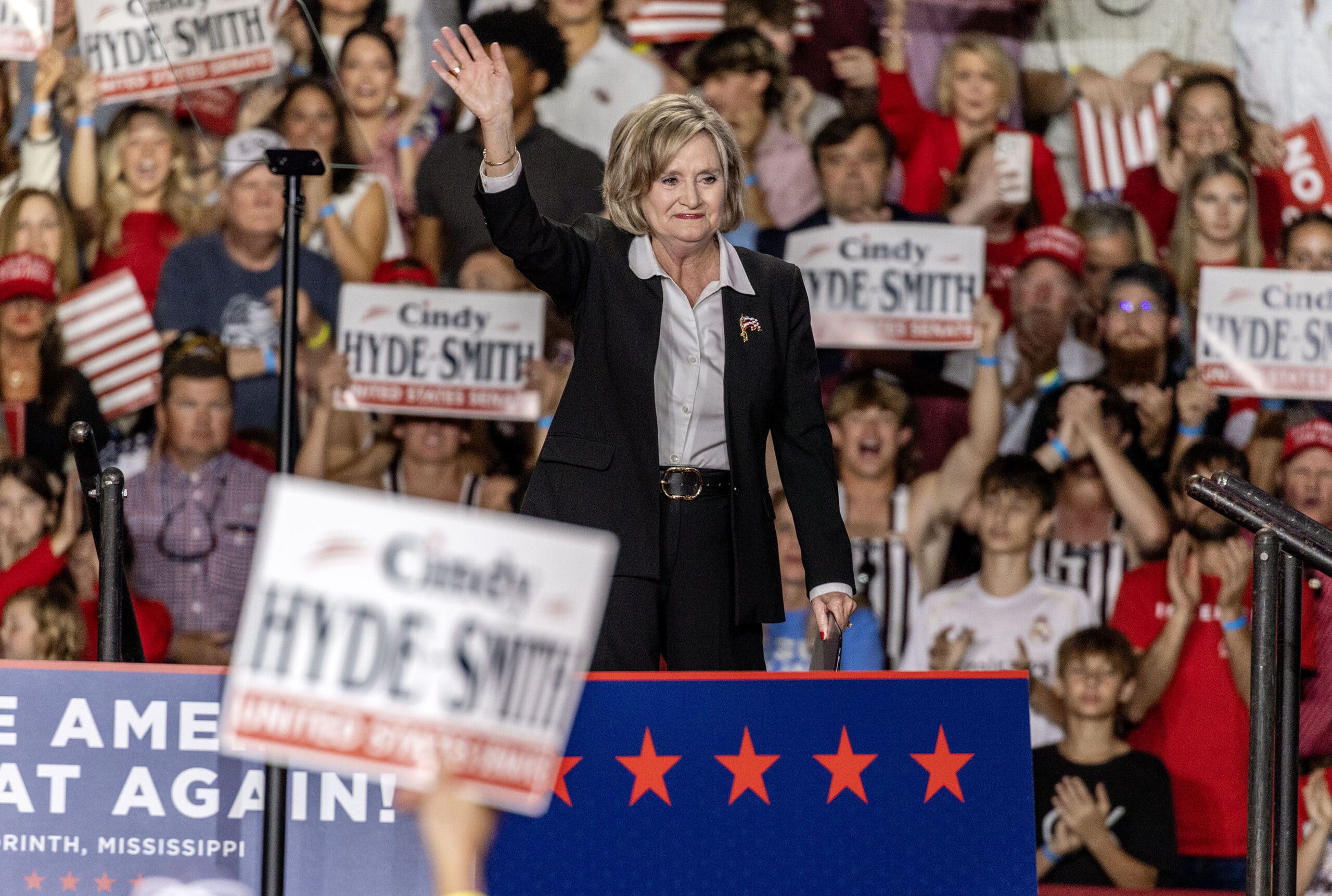
Sen. Cindy Hyde-Smith waves to supporters during President Donald Trump’s rally at the Crossroads Arena in Corinth on Monday, Oct. 26, 2026.Credit: Eric Shelton/Mississippi Today
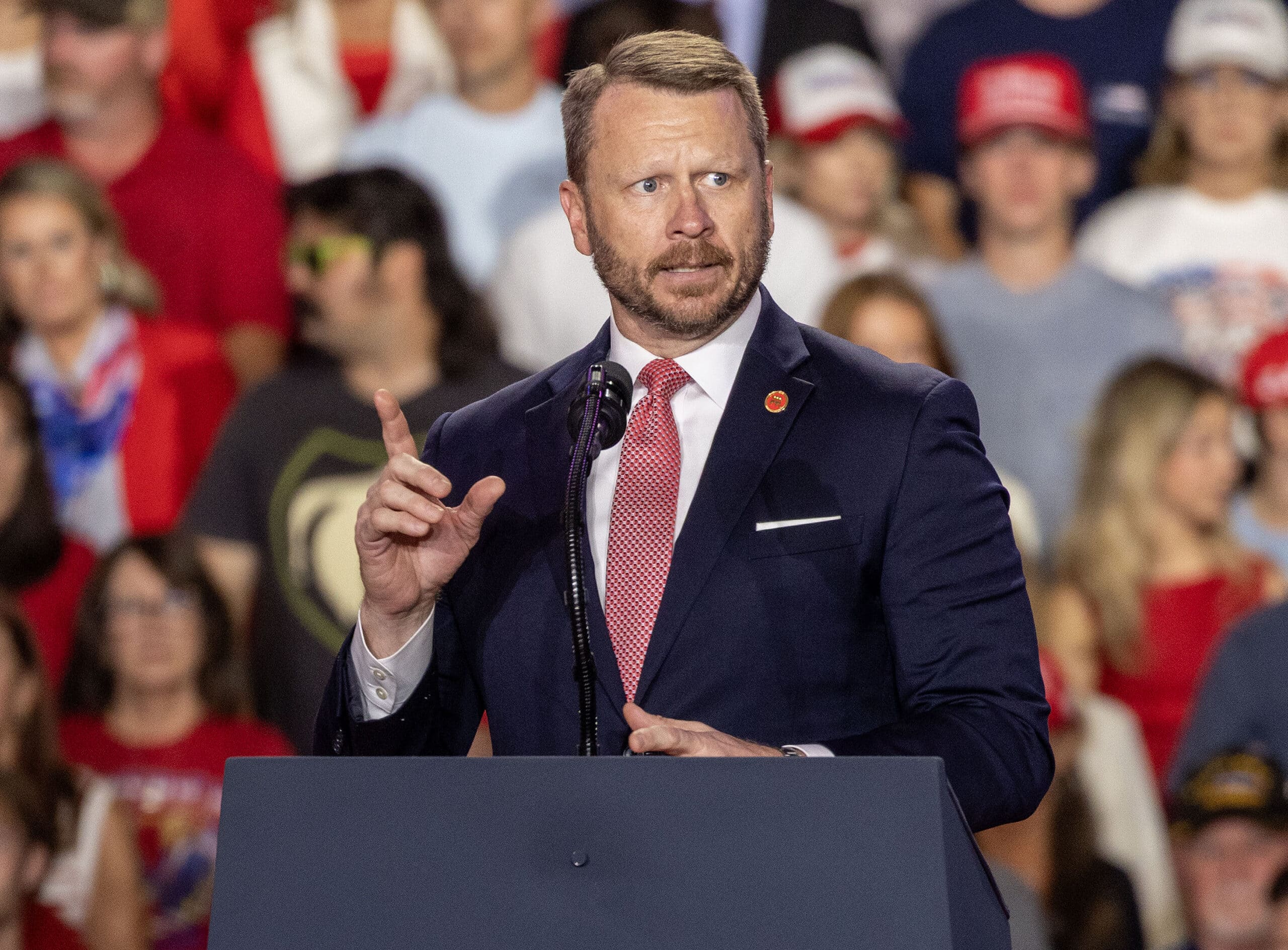
Mississippi Republican Party Chairman Mike Hurst speaks during President Donald Trump’s rally at the Crossroads Arena in Corinth on Monday, Oct. 26, 2026.Credit: Eric Shelton/Mississippi Today
Supporters gather for President Donald Trump’s rally at the Crossroads Arena in Corinth on Monday, Oct. 26, 2026.Credit: Eric Shelton/Mississippi Today
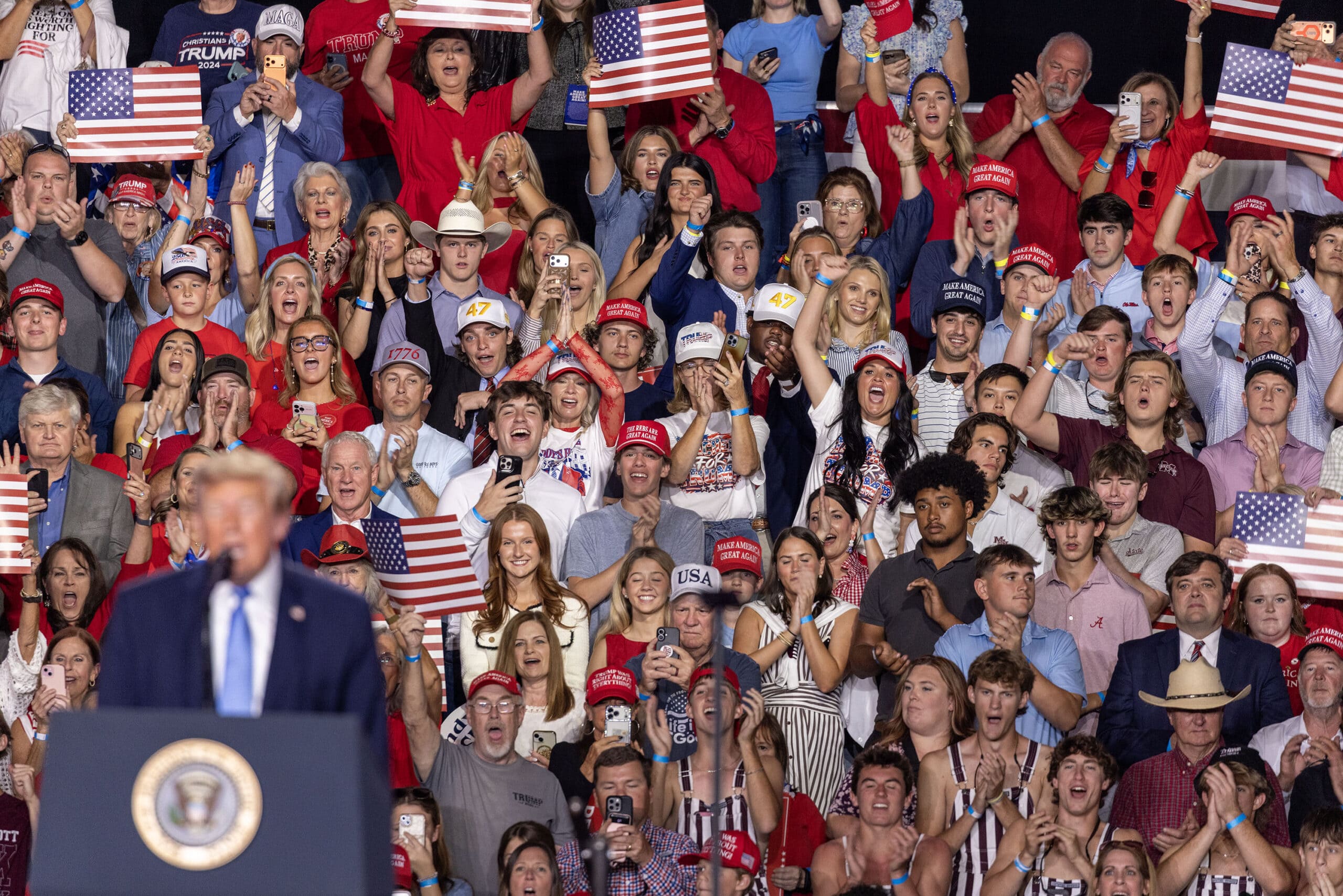
Supporters cheer during President Donald Trump’s rally at the Crossroads Arena in Corinth on Monday, Oct. 26, 2026.Credit: Eric Shelton/Mississippi Today
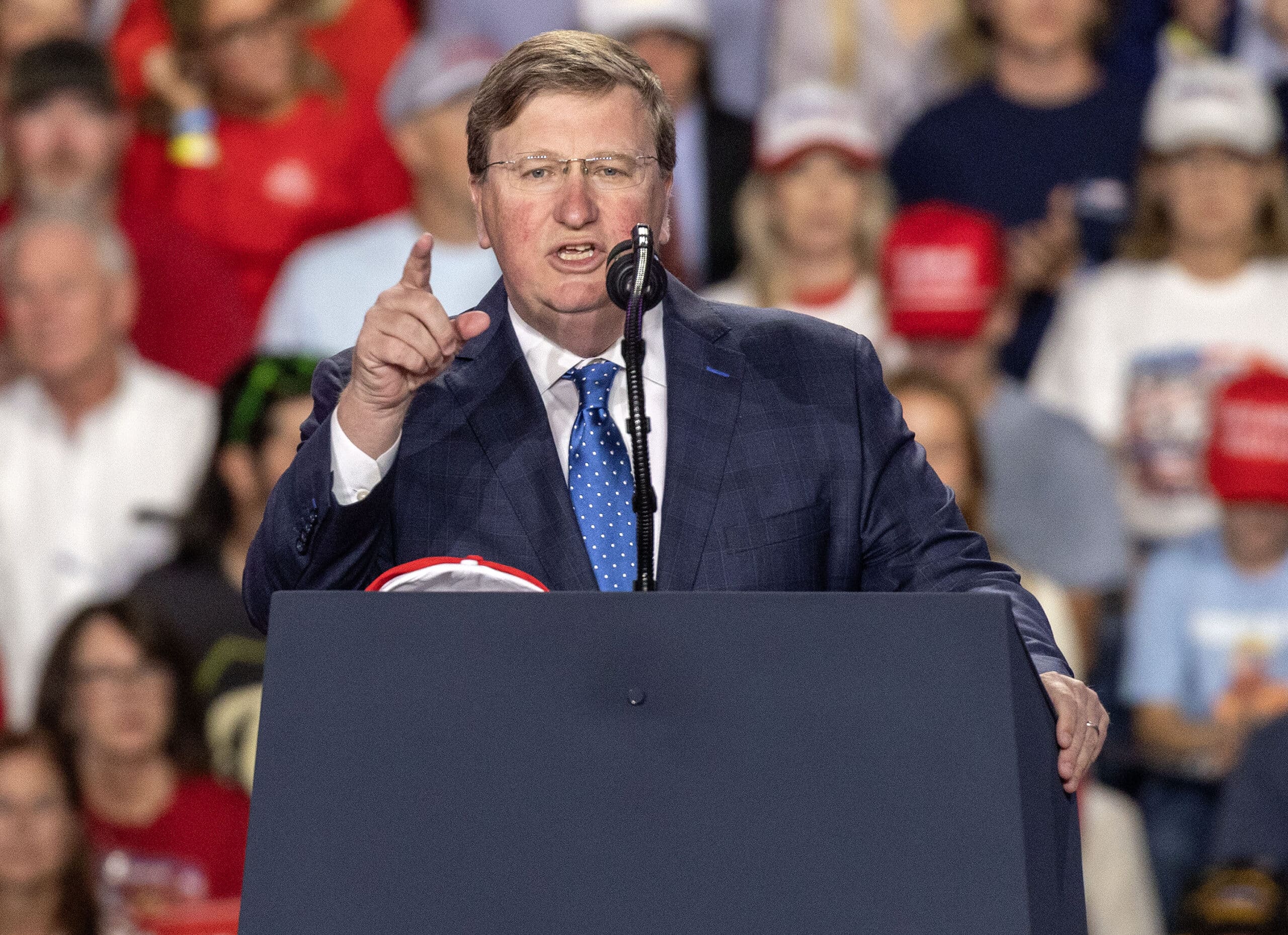
Gov. Tate Reeves speaks during President Donald Trump’s rally at the Crossroads Arena in Corinth on Monday, Oct. 26, 2026.Credit: Eric Shelton/Mississippi Today
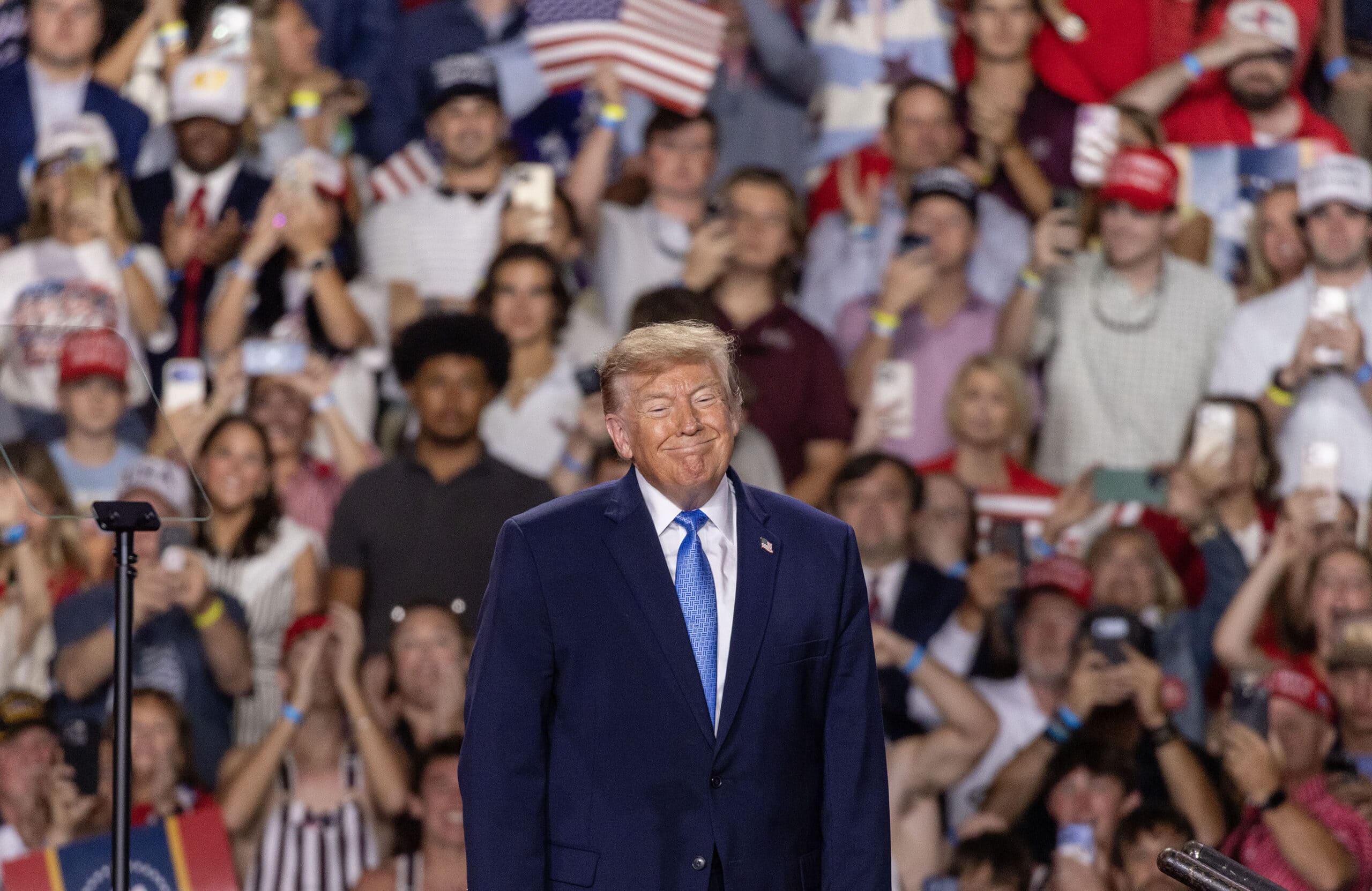
President Donald Trump smiles as he takes the stage during his rally at the Crossroads Arena in Corinth on Monday, Oct. 26, 2026.Credit: Eric Shelton/Mississippi Today
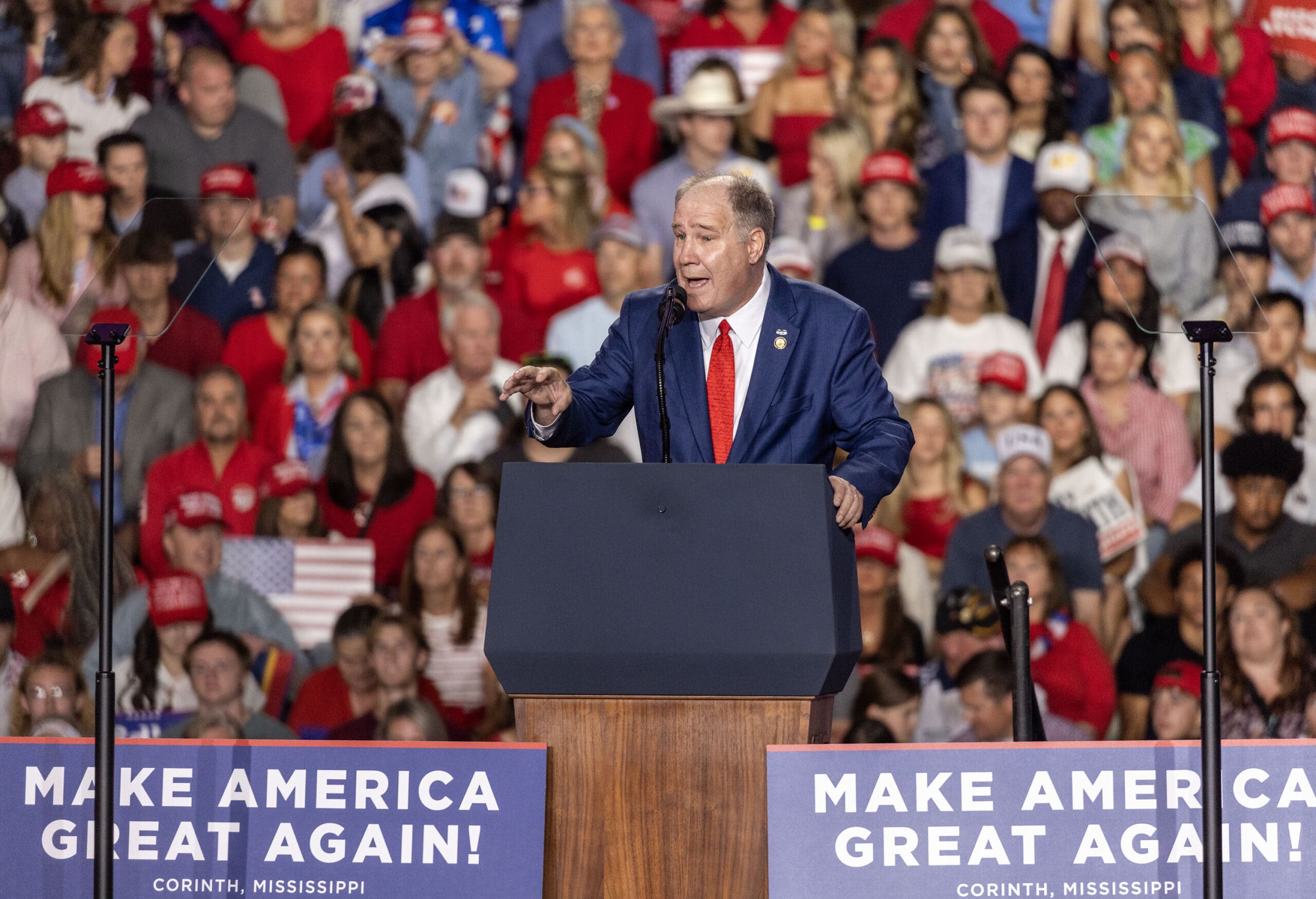
U.S. Rep. Trent Kelly speaks during President Donald Trump’s rally at the Crossroads Arena in Corinth on Monday, Oct. 26, 2026.Credit: Eric Shelton/Mississippi Today
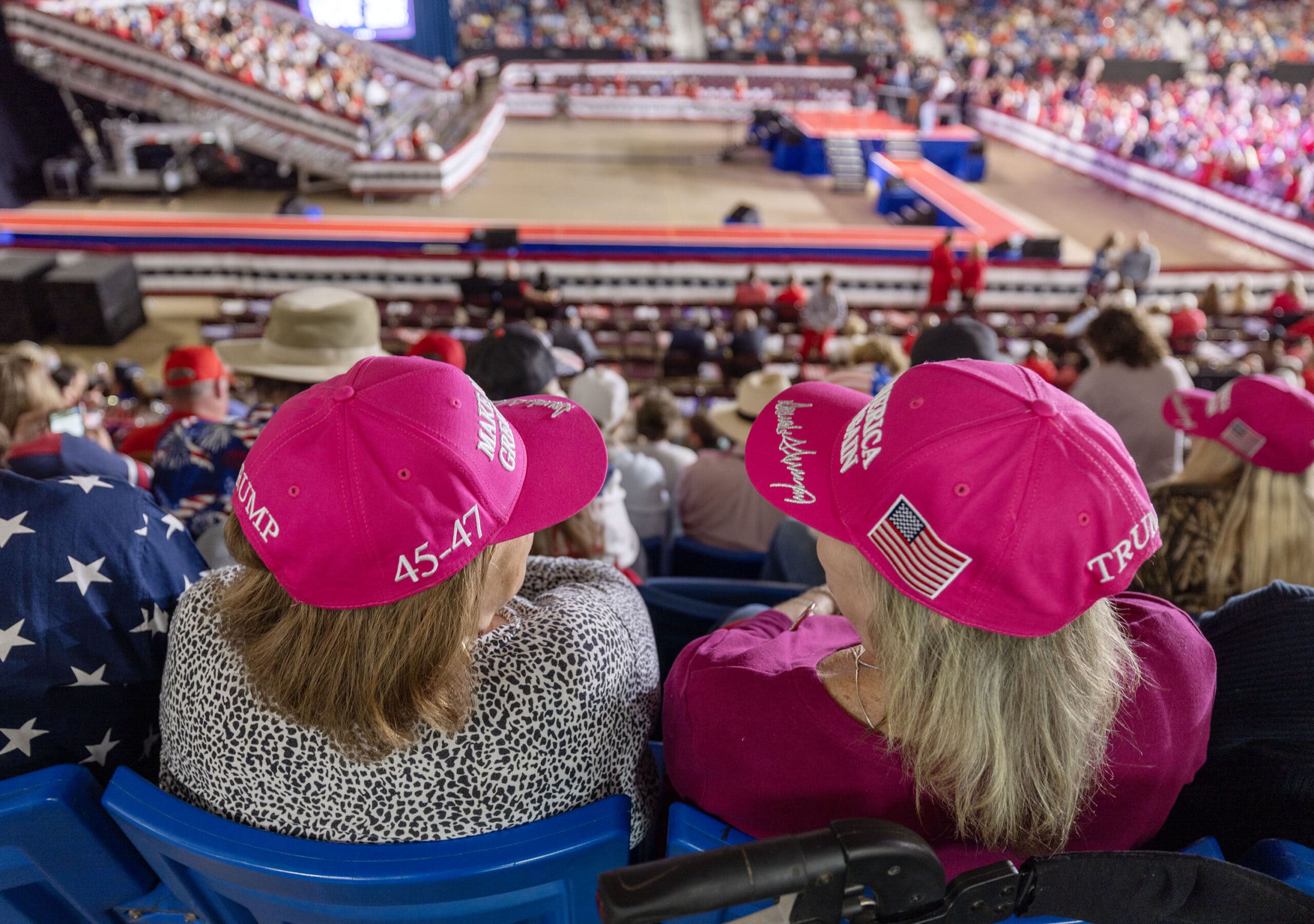
Merchandise is in place ahead of President Donald Trump’s rally at the Crossroads Arena in Corinth on Monday, Oct. 26, 2026.Credit: Eric Shelton/Mississippi Today
Supporters gather for President Donald Trump’s rally at the Crossroads Arena in Corinth on Monday, Oct. 26, 2026.Credit: Eric Shelton/Mississippi Today
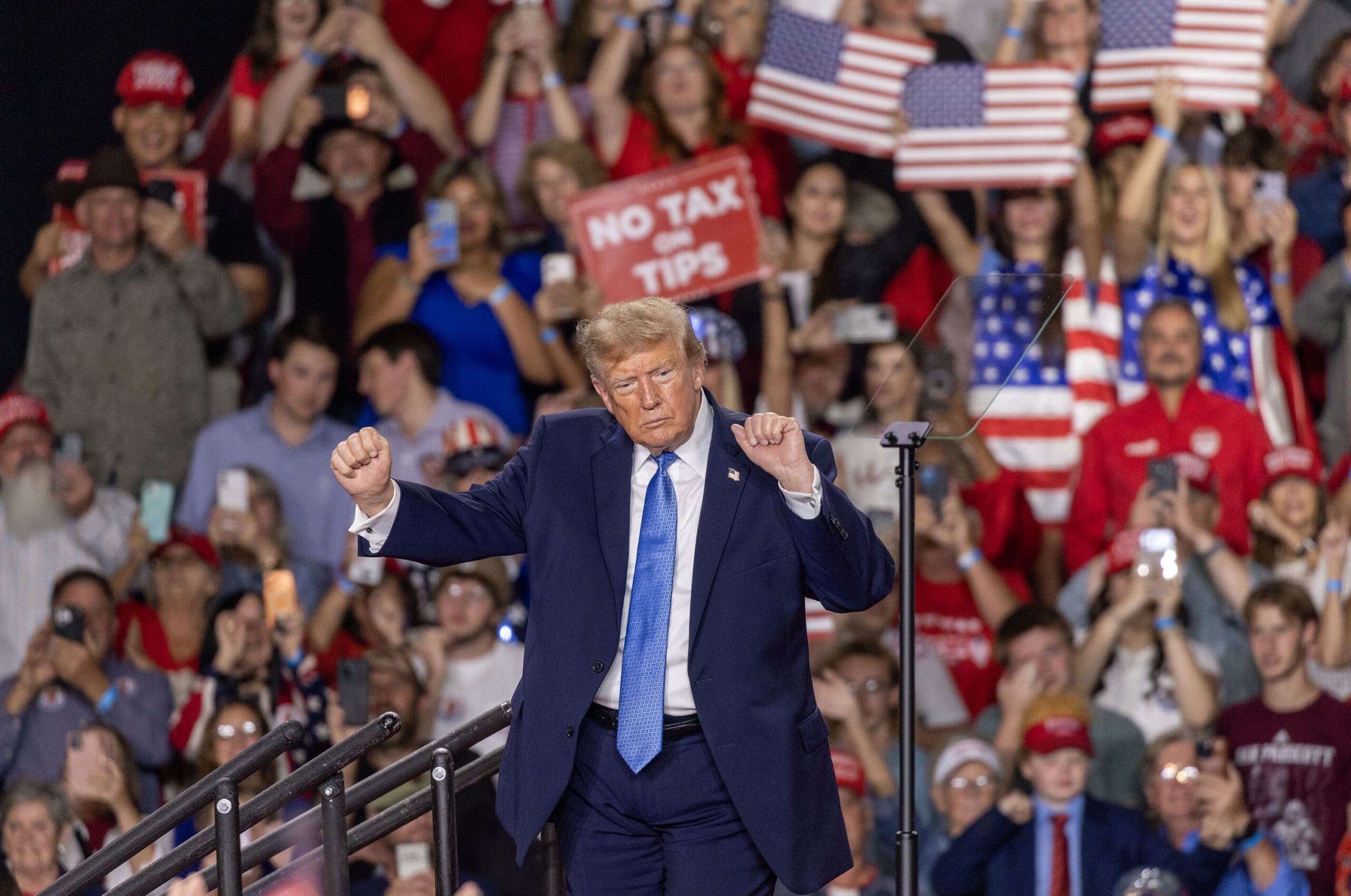
President Donald Trump dances after his speech during his rally at the Crossroads Arena in Corinth on Monday, Oct. 26, 2026.
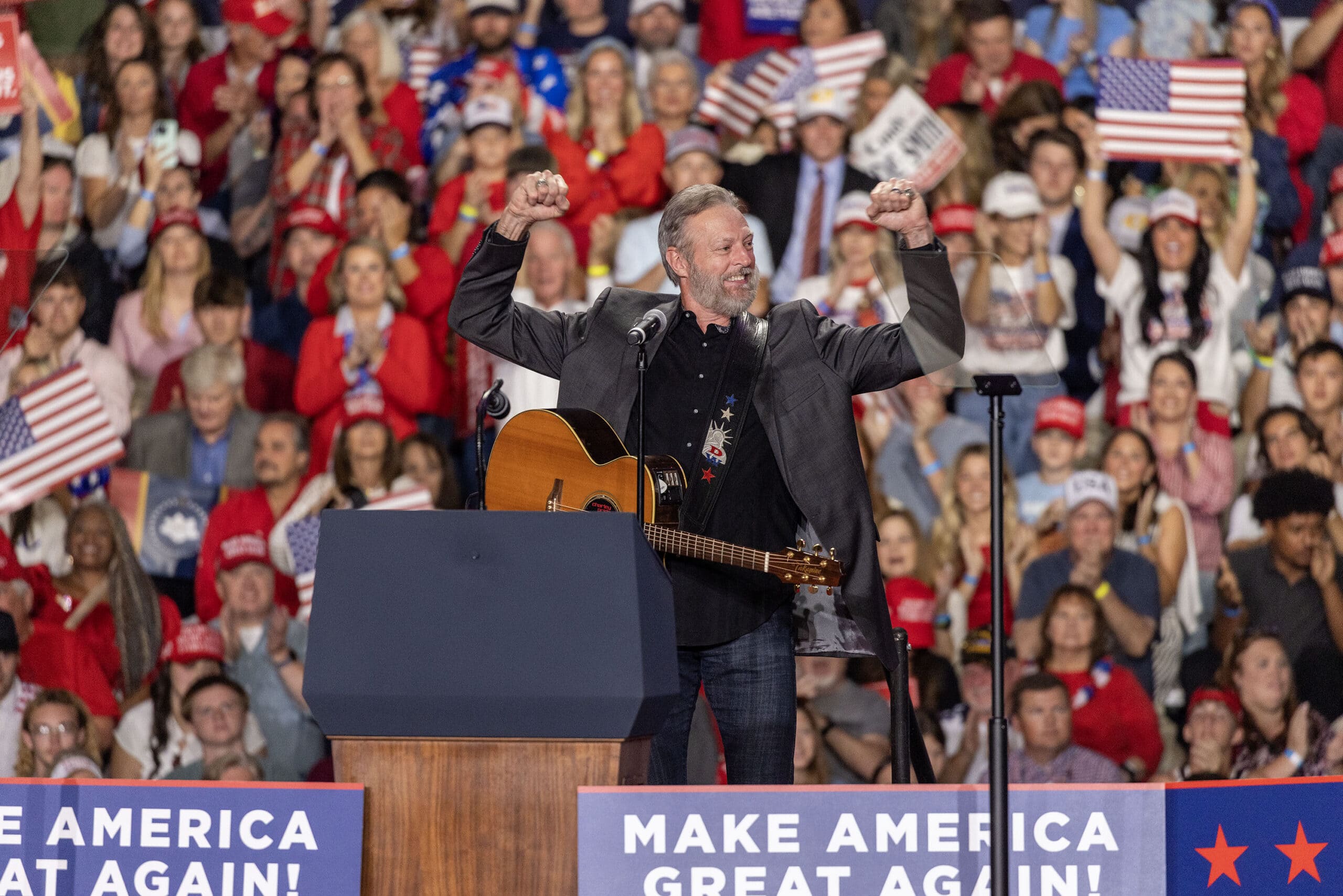
Country singer Darryl Worley prepares to perform during President Donald Trump’s rally at the Crossroads Arena in Corinth on Monday, Oct. 26, 2026.Credit: Eric Shelton/Mississippi Today
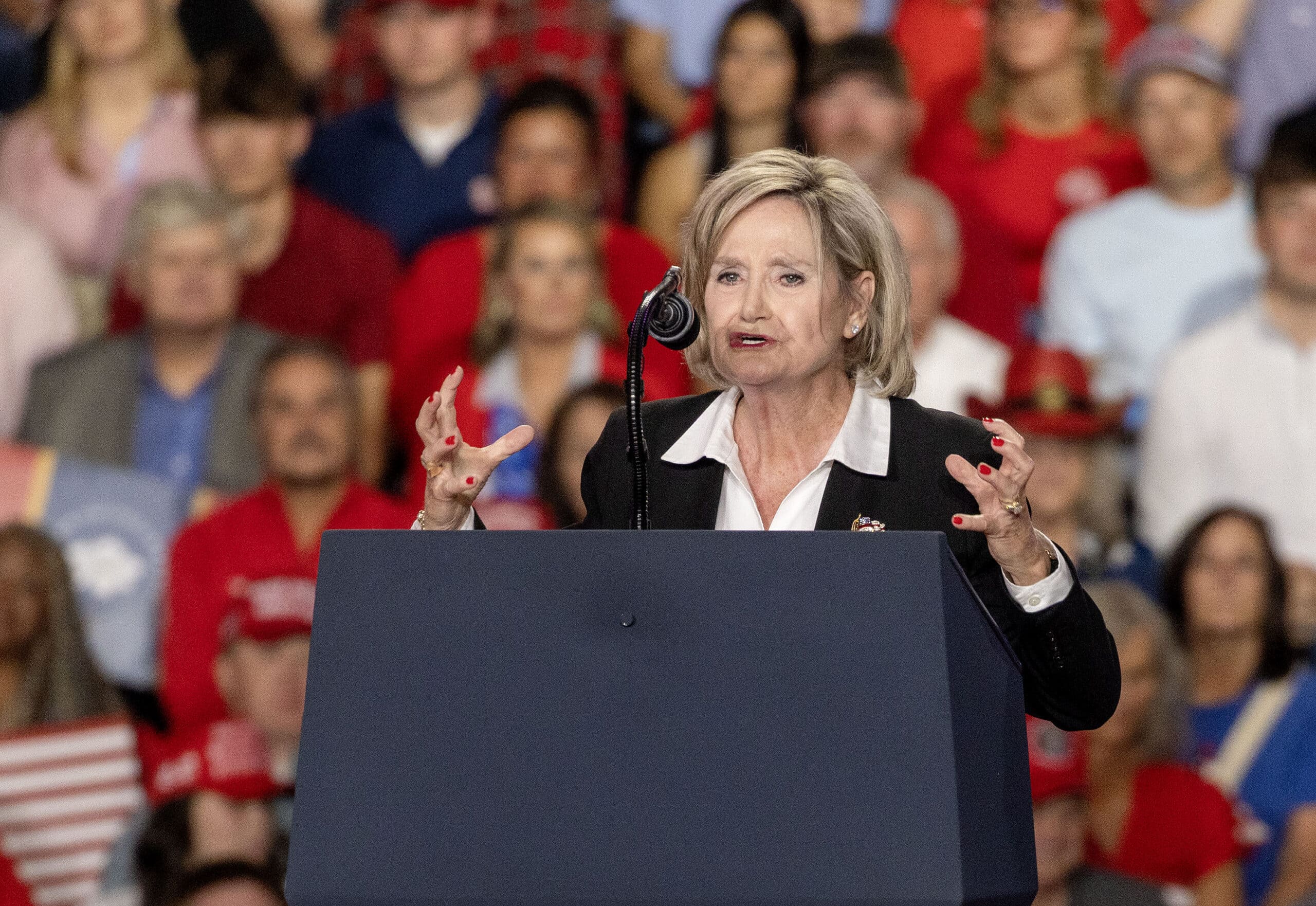
Sen. Cindy Hyde-Smith speaks during President Donald Trump’s rally at the Crossroads Arena in Corinth on Monday, Oct. 26, 2026.Credit: Eric Shelton/Mississippi Today
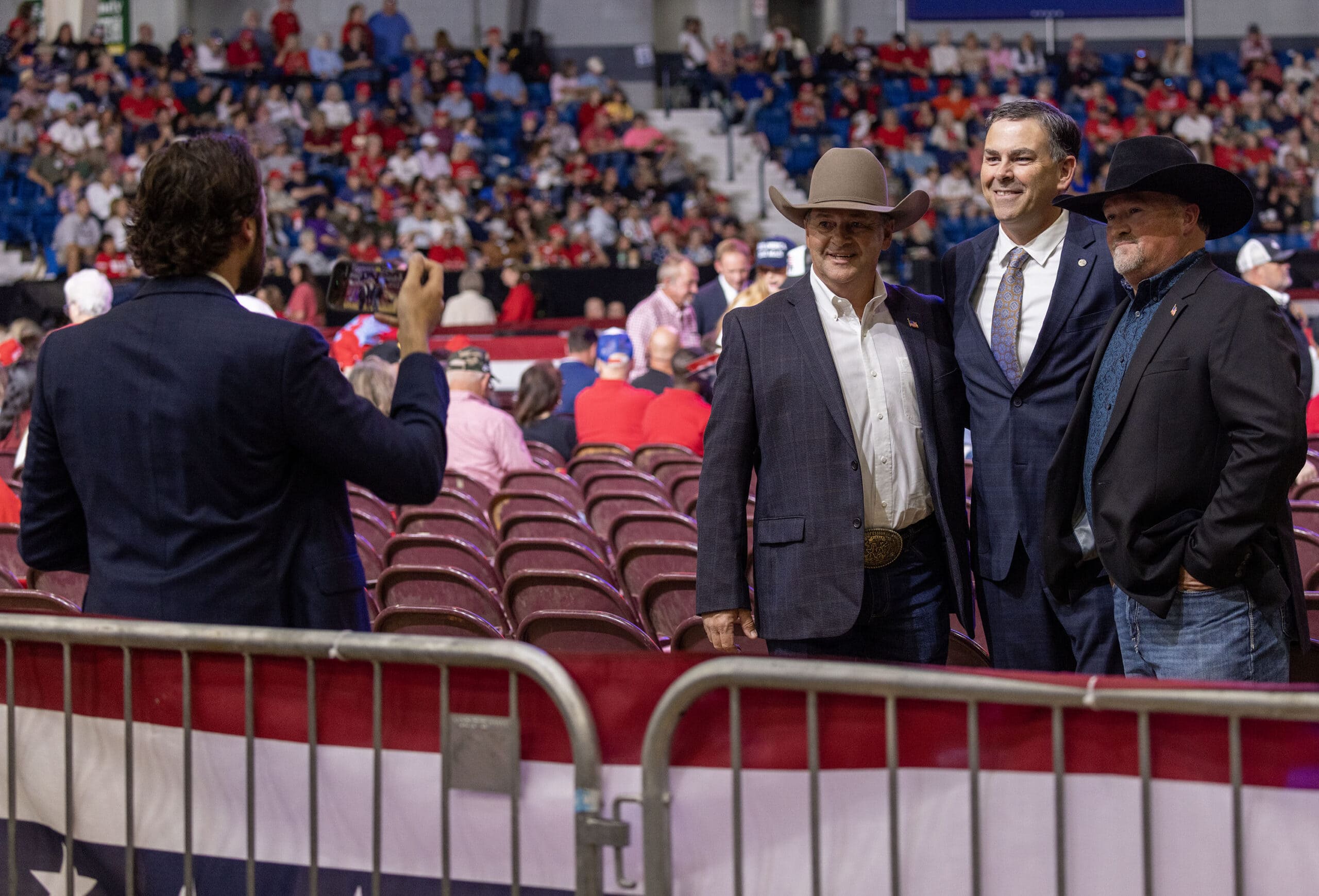
Secretary of State Michael Watson, center, takes a photo with supporters during President Donald Trump’s rally at the Crossroads Arena in Corinth on Monday, Oct. 26, 2026.Credit: Eric Shelton/Mississippi Today
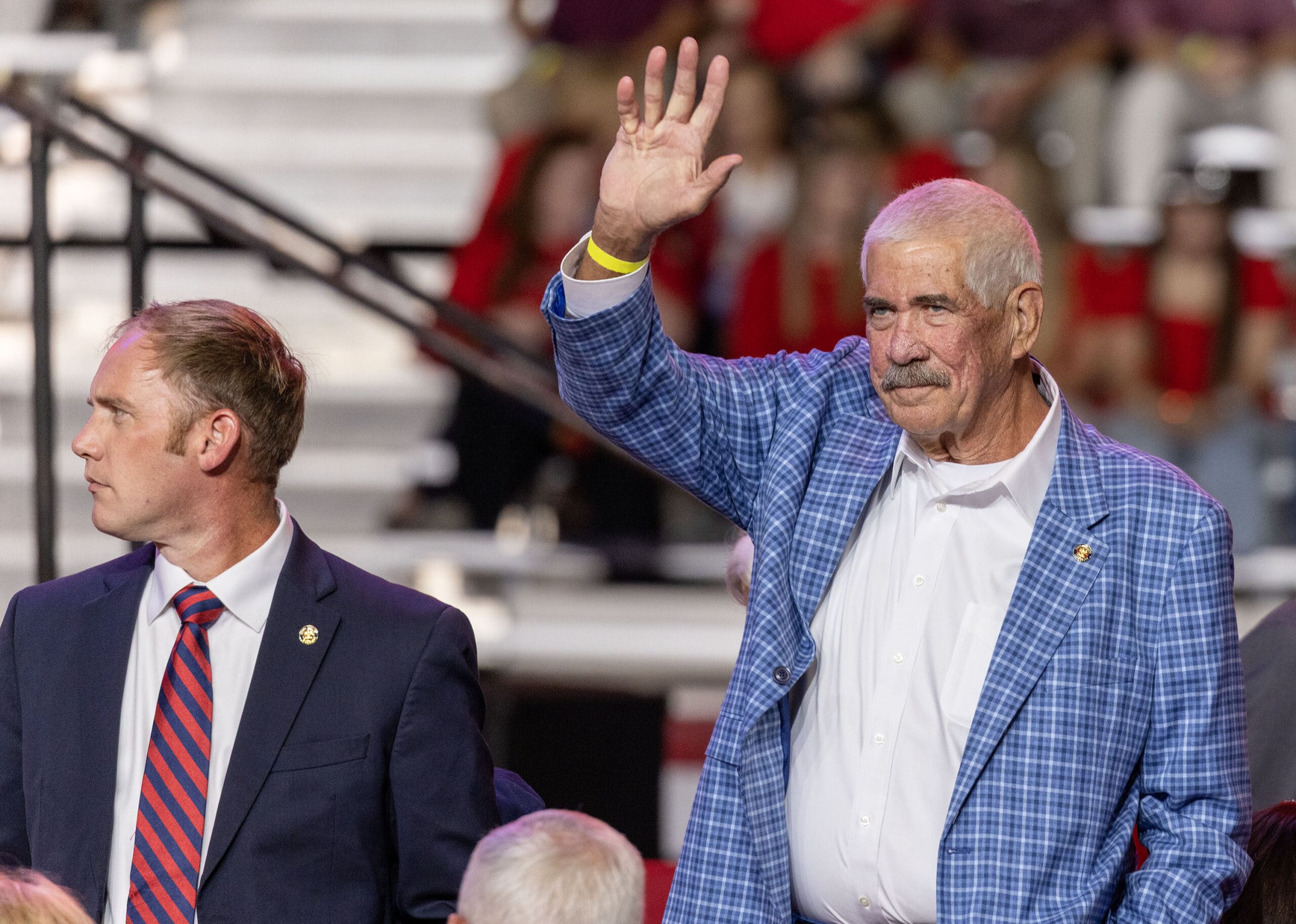
State Sen. Kevin Blackwell, right, waves at someone in the crowd during President Donald Trump’s rally at the Crossroads Arena in Corinth on Monday, Oct. 26, 2026.Credit: Eric Shelton/Mississippi Today
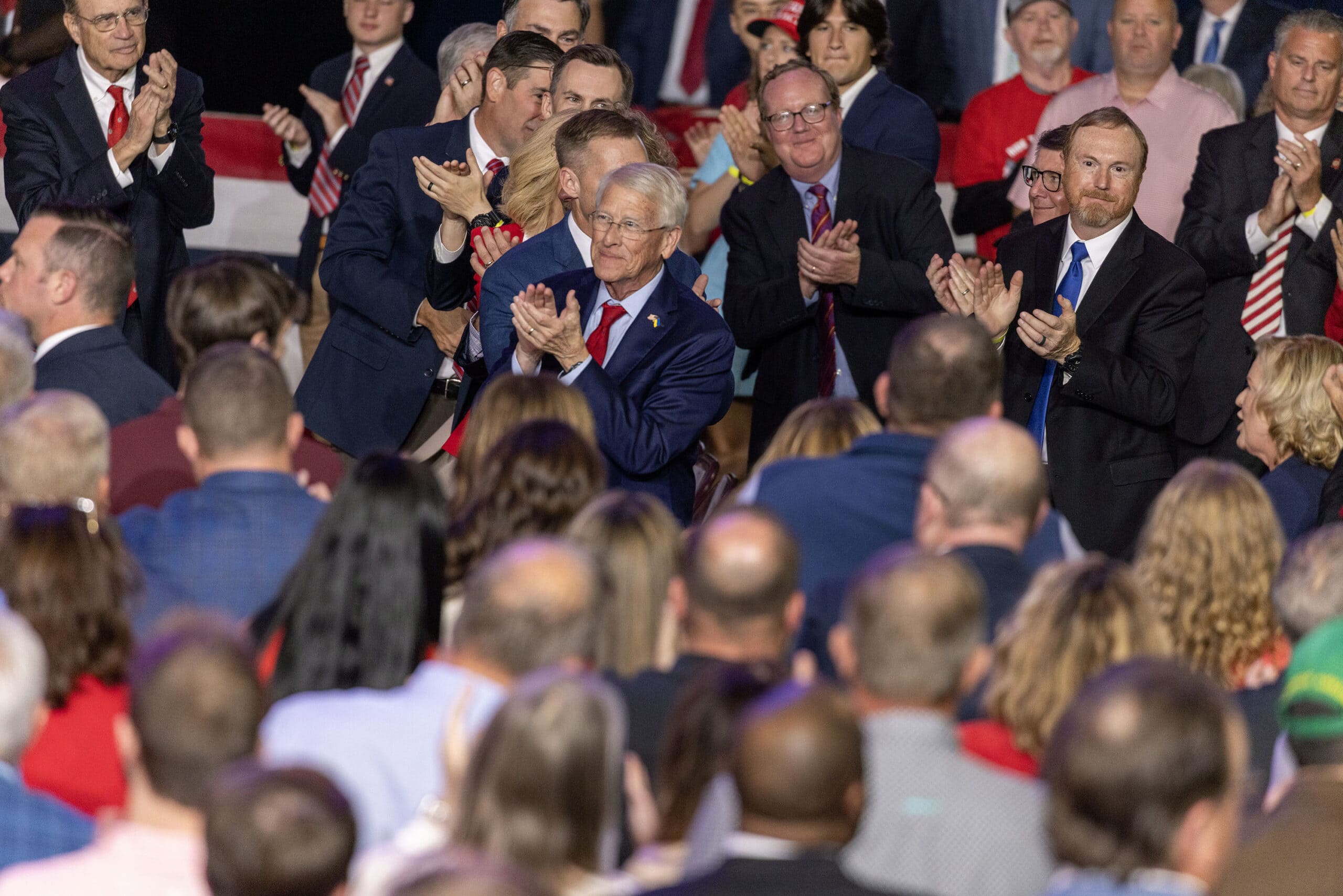
State leaders are recognized during President Donald Trump’s rally at the Crossroads Arena in Corinth on Monday, Oct. 26, 2026.Credit: Eric Shelton/Mississippi Today
Hyde-Smith said she has fought to support Trump’s agenda and that voters face a binary choice between herself and an opponent she called “radical.”
“The control of the Senate is at stake on Nov. 3,” Hyde-Smith said. “I want you to send me back to be that fighter with the president.”
In a scattered speech that lasted just over 80 minutes, Trump called Colom, a district attorney in north Mississippi, a “Democrat communist” and accused him of being soft on crime and overly supportive of transgender rights. He called Hyde-Smith a “great friend” and “unbelievable, frankly.”
He said his administration has protected American jobs through tariffs, deported large numbers of immigrants and reduced crime. He also launched into commentary on Mississippi’s “beautiful women” and the allegedly poor state of the White House’s crown molding when he arrived back in office two years ago.
Trump was preceded on stage by Republican U.S. Rep. Trent Kelly, Mississippi Republican Party Chairman Mike Hurst and Gov. Tate Reeves.
Reeves said Mississippi is faced with a choice between the rule of “conservative rural America” and the “socialist coast.” Other Republican officials in attendance included U.S. Rep. Michael Guest, Secretary of State Michael Watson, State Auditor Shad White and multiple state lawmakers.
Supporters gather for President Donald Trump’s rally at the Crossroads Arena in Corinth on Monday, Oct. 26, 2026. Credit: Eric Shelton/Mississippi Today
According to many polls, Trump’s support has plummeted as prices have risen for essential goods such as groceries and gasoline. Colom has responded by labeling Hyde-Smith “Cindy High Prices” and has hammered her for advising Mississippians to “pick another protein” amid the rising cost of beef.
Hyde-Smith has responded by calling Colom a “transgender defender” and has said his campaign has been buoyed by liberal out-of-state donors such as billionaire George Soros.
In a statement ahead of the rally, the Democratic aligned Super PAC American Bridge 21st Century announced it had spent $2.1 million on Mississippi’s Senate race.
“Cindy Hyde-Smith is a weak candidate and one of the most hated GOP senators in Congress who is on record voting for legislation that has hurt her constituents,” said American Bridge 21st Century President Pat Dennis. “Mississippians want a Senator who will fight to lower their costs, not one who will vote to let beef prices soar, then shrug them off and suggest finding another protein.”
As Trump’s supporters lined up outside to get into the rally, many said rising costs across the economy have hit their pocketbooks hard. But they also said their support for Trump hadn’t wavered, citing potential long-term benefits of his policies.
Lori Lawson, the mayor of Burnsville, owns Subway franchises and a convenience store that sells gasoline and diesel. She said rising prices have hit everybody hard, but people are fixating too much on gas in particular.
“Yes, the price of gasoline has gone up, and it’s affected everybody,” Lawson said. “People want to complain about the price of gas and diesel, but they don’t have a problem giving $5 per gallon of water. That water doesn’t make anything go.”
Lawson came to the rally with Lance Heavener, a Burnsville city alderman who owns a lawn servicing company and a funeral home. He said rising prices have cost him an additional $58,000 this year to do business, but he was still willing to take the financial hit if it meant winning a war with Iran.
President Donald Trump speaks during his rally at the Crossroads Arena in Corinth on Monday, Oct. 26, 2026. Credit: Eric Shelton/Mississippi Today
“If Trump can get those folks under control, I’m willing to bear the expense. I don’t know how long we can do it, but hopefully it’ll be short enough.”
Colom traveled to Corinth on Monday to hold a press conference before the rally. He criticized Hyde-Smith for refusing to debate him and campaigning with Trump instead.
“We’ve got a message we want to send to President Trump and our junior senator,” Colom said. “President Trump and our junior senator, they’ve been doing too much talking and not enough listening.”
In a possible overture to Trump’s base, Colom said Hyde-Smith hasn’t done enough to urge Trump to release the Epstein files, accusing her of being more willing to “protect pedophiles over people.”
After the press conference, Colom went to the Crossroads Arena, where he spoke with attendees outside waiting in line.
The vast majority of those who attended the rally showered Trump with praise and said they had no reservations about voting for Hyde-Smith.
On stage Monday, the president didn’t hesitate to highlight the adoration.
“You like me, I like you,” Trump told the crowd. “That’s just the way it is.”
Referring to his efforts to rename the Gulf of Mexico the Gulf of America, Trump also promised to never do the same with the Mississippi River, apparently because Mississippi is a Republican-led state.
“Boy that would be terrible. Can you imagine that,” Trump said. “I promise I will never change the name of the Mississippi. Cindy Hyde (Smith) and Roger (Wicker) would have a little problem with me if I did that.”
Audio articles are automated for accessibility. Humans wrote and edited the story; however, this audio has not been reviewed for accuracy and may contain errors. Read more about how we use AI to increase access to our reporting.
SR1 College Preparatory and STEM Academy has lost its charter and must halt instruction by the end of the year — a first-time penalty for a Mississippi charter school.
The Mississippi Charter School Authorizer Board voted unanimously on Monday to revoke the Canton school’s charter. Two board members, Candace Robbins and Marcy Scoggins, were absent.
While other charter schools have been cited for breaking federal education law and violating the terms of their contract, no other school has been ordered to effectively shut its doors.
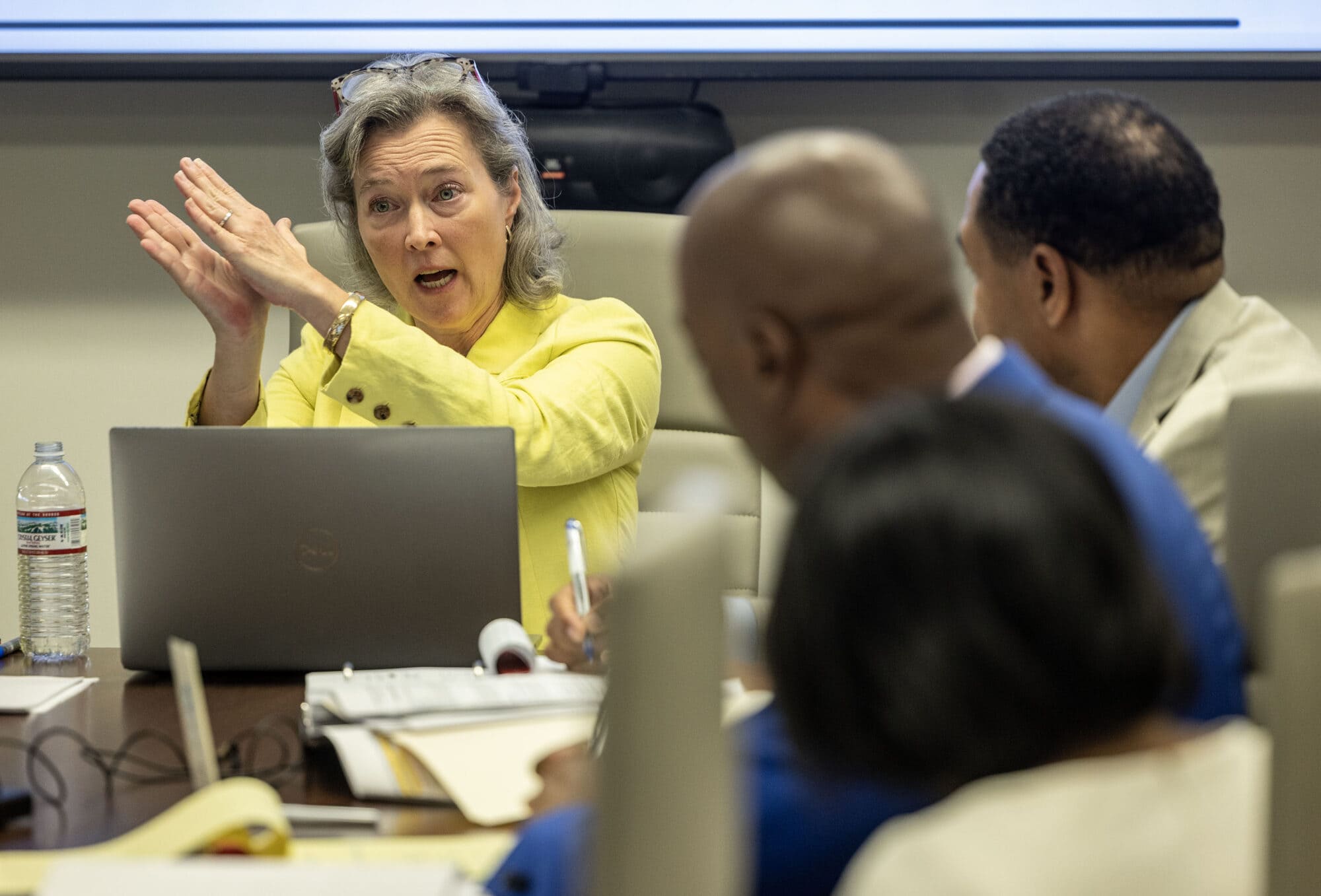
Hearing officer Kim Turner asks questions during a hearing about SR1 on Thursday, May 14, 2026, in Jackson. Credit: Eric Shelton/Mississippi Today
Kim Turner, an assistant attorney general who serves as state agencies director in the attorney general’s office, recommended the board revoke the school’s charter because of numerous instances of noncompliance with federal law, state law and the terms of its 2020 contract.
The authorizer board had waited four months, since a related May 14 hearing Turner presided over, to take action.
The evidence presented during that hearing affirmed a “statutory and contractual basis” for revoking the school’s charter, Turner concluded in her recommendation. “Such a decision would be neither arbitrary nor capricious.”
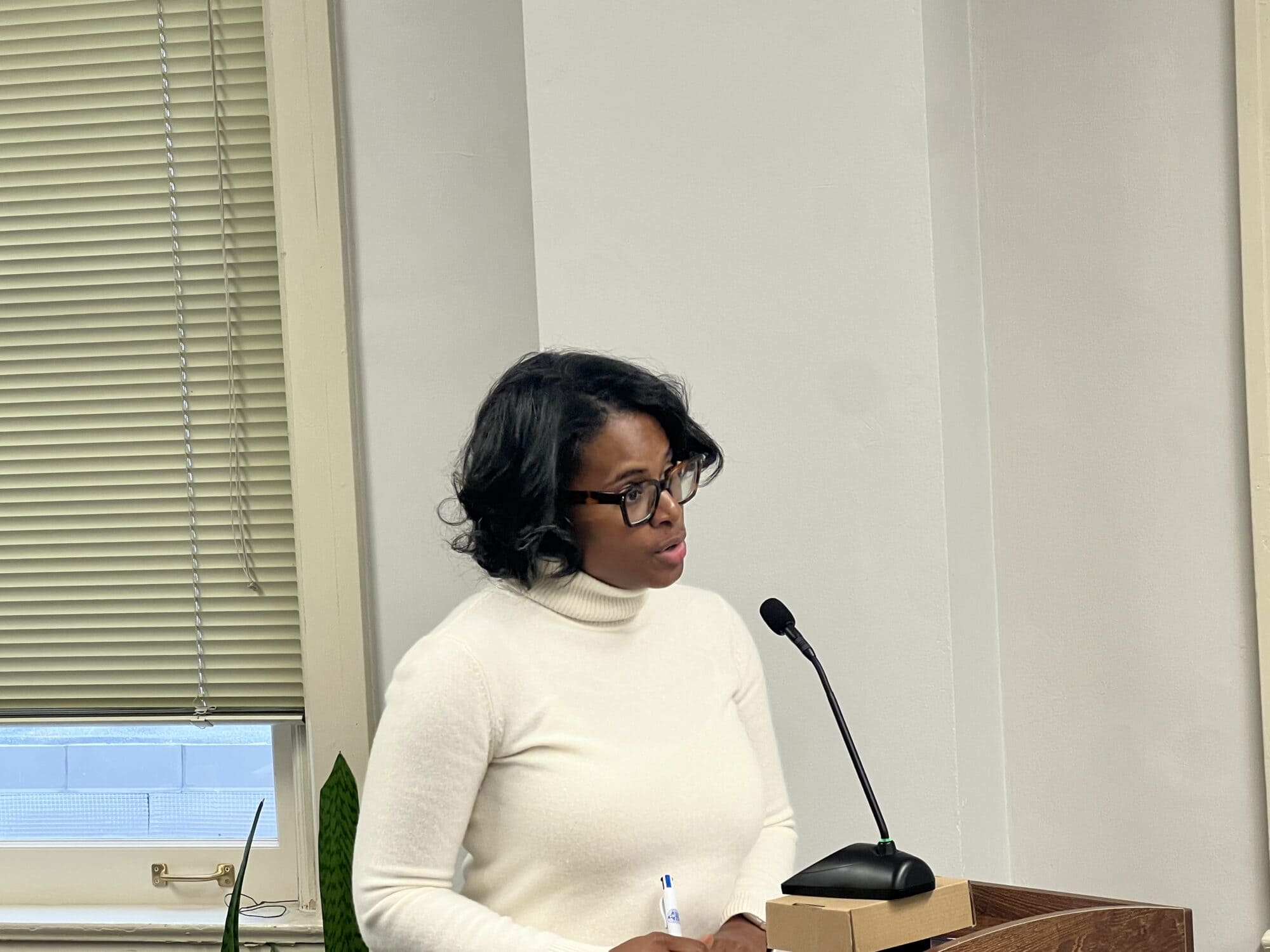
Earlier in the meeting, Dorlisa Hutton, an SR1 administrator and wife of Chief Executive Officer Tamu Green, made a final plea before board members moved to vote on the fate of the school.
Hutton asked the board to hold off on a final decision until the school’s latest audit was available — an alternative action Turner had suggested. Hutton also asked the board to return the school to good standing. She asked the board to release $300,000 in charter school start-up funding, which had been frozen pending the vote on the school’s fate.
Dorlisa Hutton, vanguard ambassador for SR1 College Preparatory and STEM Academy, speaks at the Dec. 8, 2025 meeting of the Mississippi Charter School Authorizer Board Meeting in Jackson. Credit: Leonardo Bevilacqua/Mississippi Today
Returning the school to good standing would mean “we can build the facilities our students deserve and bring to the table the bankers and partners who are ready to invest in Canton,” Hutton said. “And it means the chance for Mississippi’s first college prep and STEM [science, technology, engineering and math] charter school serving children of whom nearly nine and 10 are economically disadvantaged to become the first charter school in this state to earn an A.”
Hutton did not respond to questions from Mississippi Today about whether the school planned to appeal.
Jamie Travis, an attorney for the charter school, suggested in May he would pursue an appeal process if the authorizer board voted to revoke the school’s charter. The appeal should be directed to the Hinds County Chancery Court, Turner said, which is where the board is based.
The board’s vote ends a process that began in December, when the authorizer board reviewed the school’s financial statements, which showed SR1 CPSA had one day’s cash on hand. The school had also over projected its enrollment each year since it opened in 2023.
SR1 CPSA was the only charter to face revocation twice. The authorizer board first cited the school for requesting money to serve 150 students, but enrolling 12. The school spent $816,725 that year, which would break down to about $68,060 per student — five times what the average Mississippi school district spends.
“The record established this revocation proceeding did not arise from one isolated event. Rather, these proceedings were initiated following years of notice, monitoring intervention, corrective action, and requests for and production of documents,” Turner found.
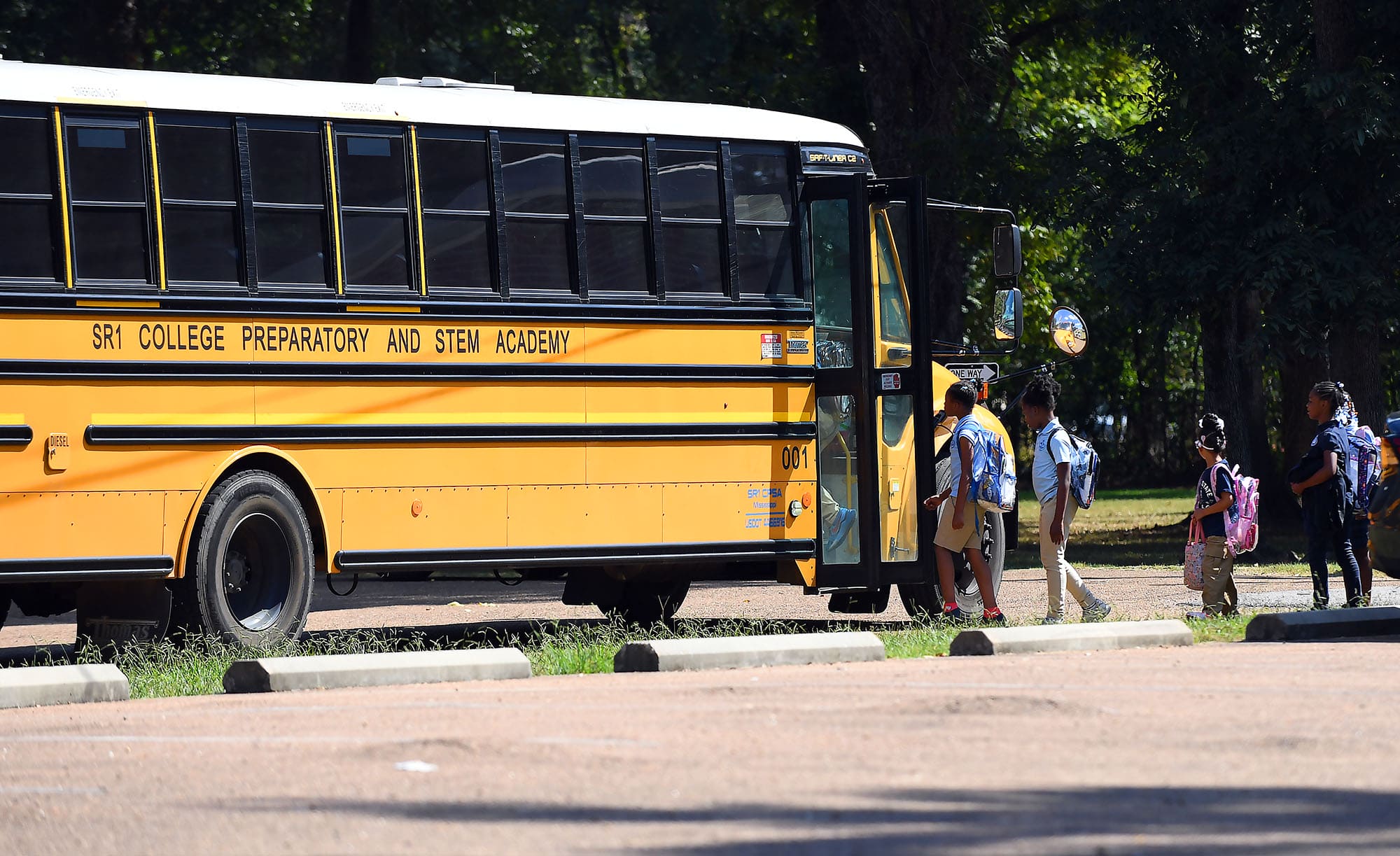
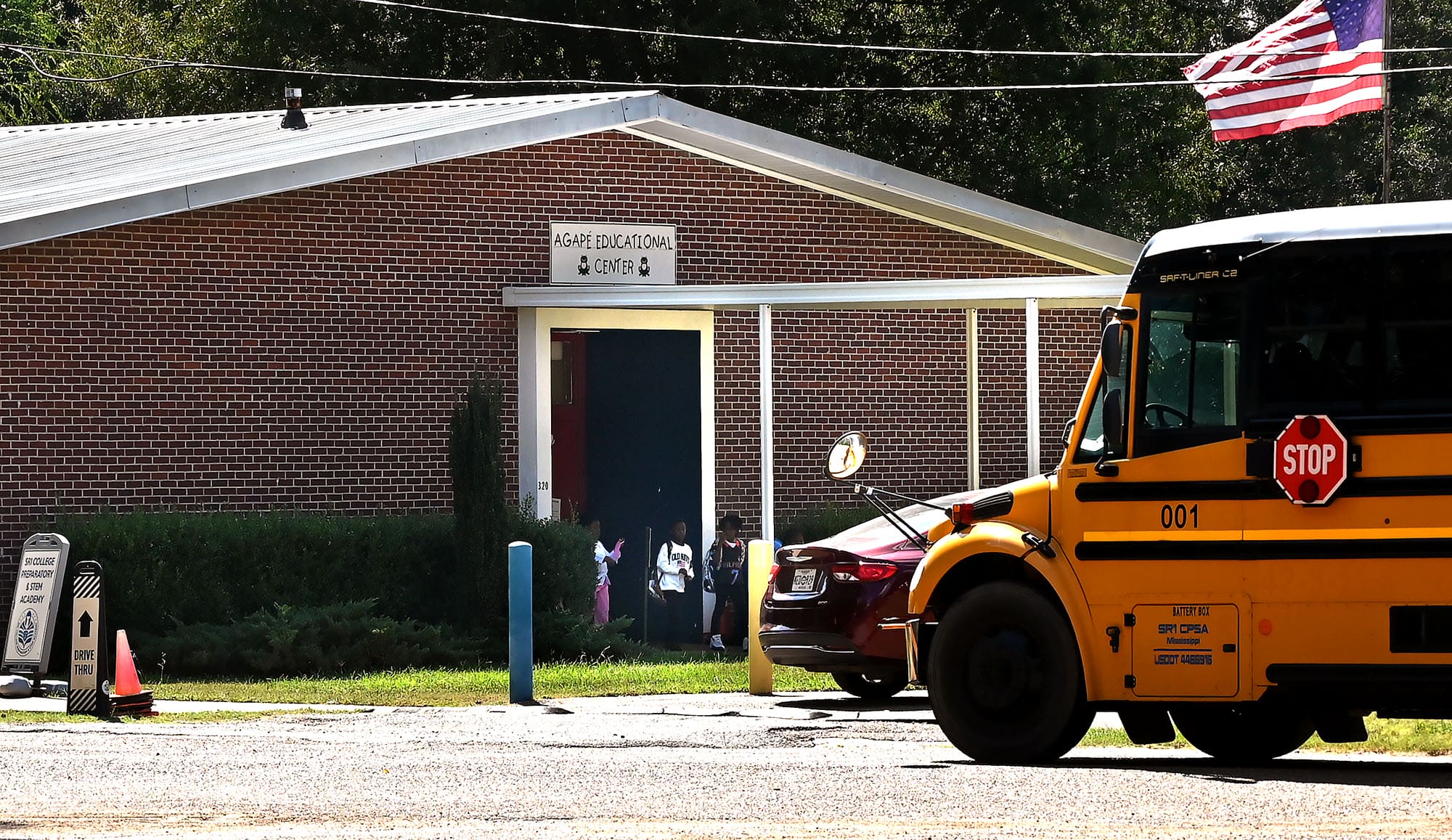
Students head to waiting vehicles and school buses after classes end for the day at SR1 College Preparatory and Stem Academy, Tuesday, Sept. 29, 2026, in Canton. Credit: Vickie D. King/Mississippi Today
The board could not act without a recommendation from Turner. That board received that recommendation on Oct. 6.
Regulators had reason to worry about the school’s future. A disorganized business office and an allegedly unsafe cafeteria were just some red flags that came up during inspections by authorizer board employees. Visits from other agency inspectors soon followed.
Green severely mismanaged the school, charter board attorney Dillon Pitts argued at the May hearing. Also at the hearing, Green said his “unwritten rule” of management was: “we just spent.” He claimed to not know that school records had to present the best financial snapshot by the end of the fiscal year.
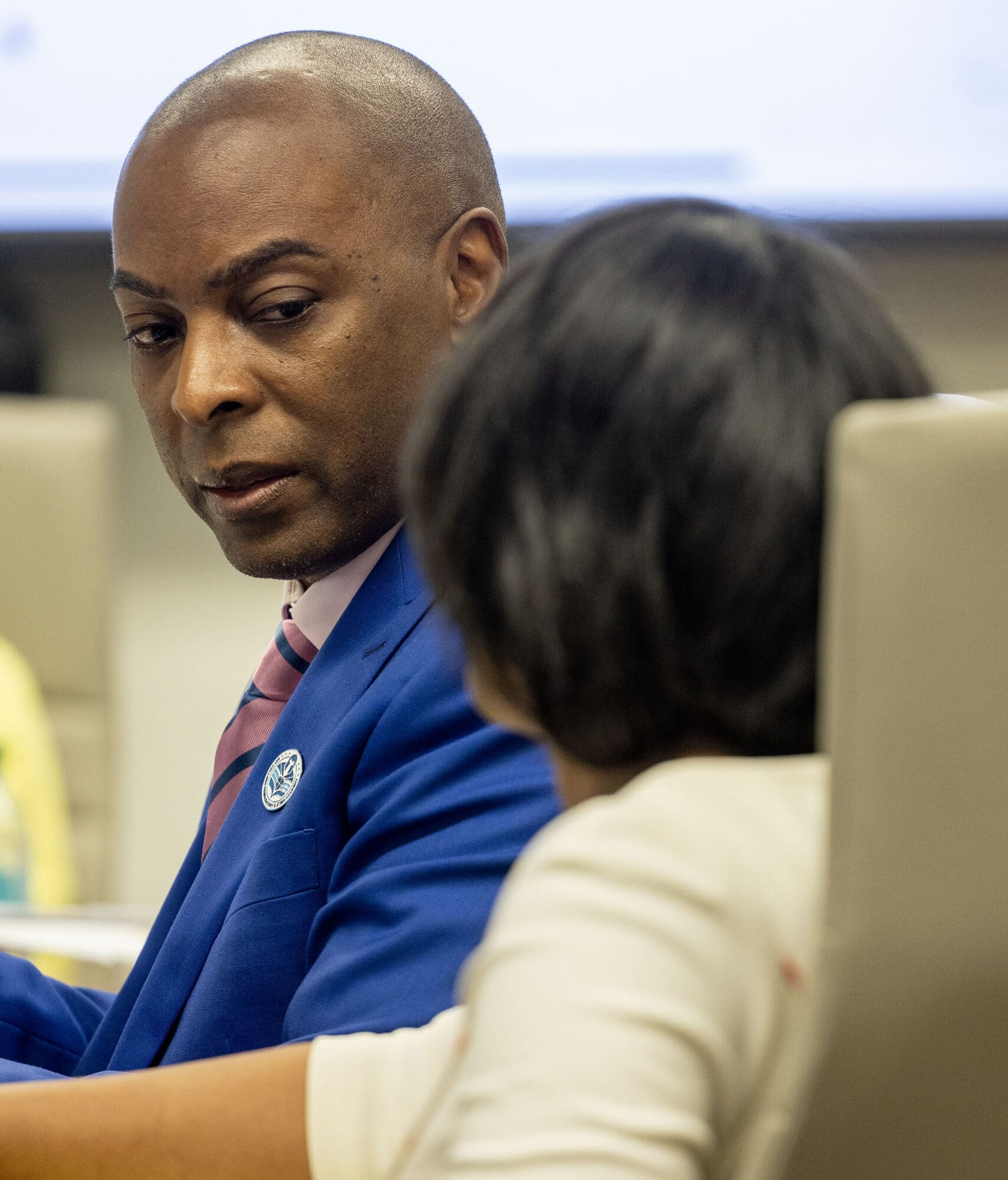
Tamu Green, CEO of SR1, confers with Dorlisa Hutton, chief operations officer and vice president for SR1 College Preparatory and STEM Academy, during a hearing about SR1 on Thursday, May 14, 2026, in Jackson. Credit: Eric Shelton/Mississippi Today
The school was also out of compliance with federal food safety and nutrition guidelines.
A Mississippi Today investigation found school leadership tried to deceive regulators before inspections by moving furniture and other supplies on site and retagging them. Former employees accused SR1 leadership of deceptive business practices.
The school has experienced significant turnover as well. The school’s top administrator resigned at the end of September, after starting in August. The school is on its third business manager in less than a year.
Audio articles are automated for accessibility. Humans wrote and edited the story; however, this audio has not been reviewed for accuracy and may contain errors. Read more about how we use AI to increase access to our reporting.
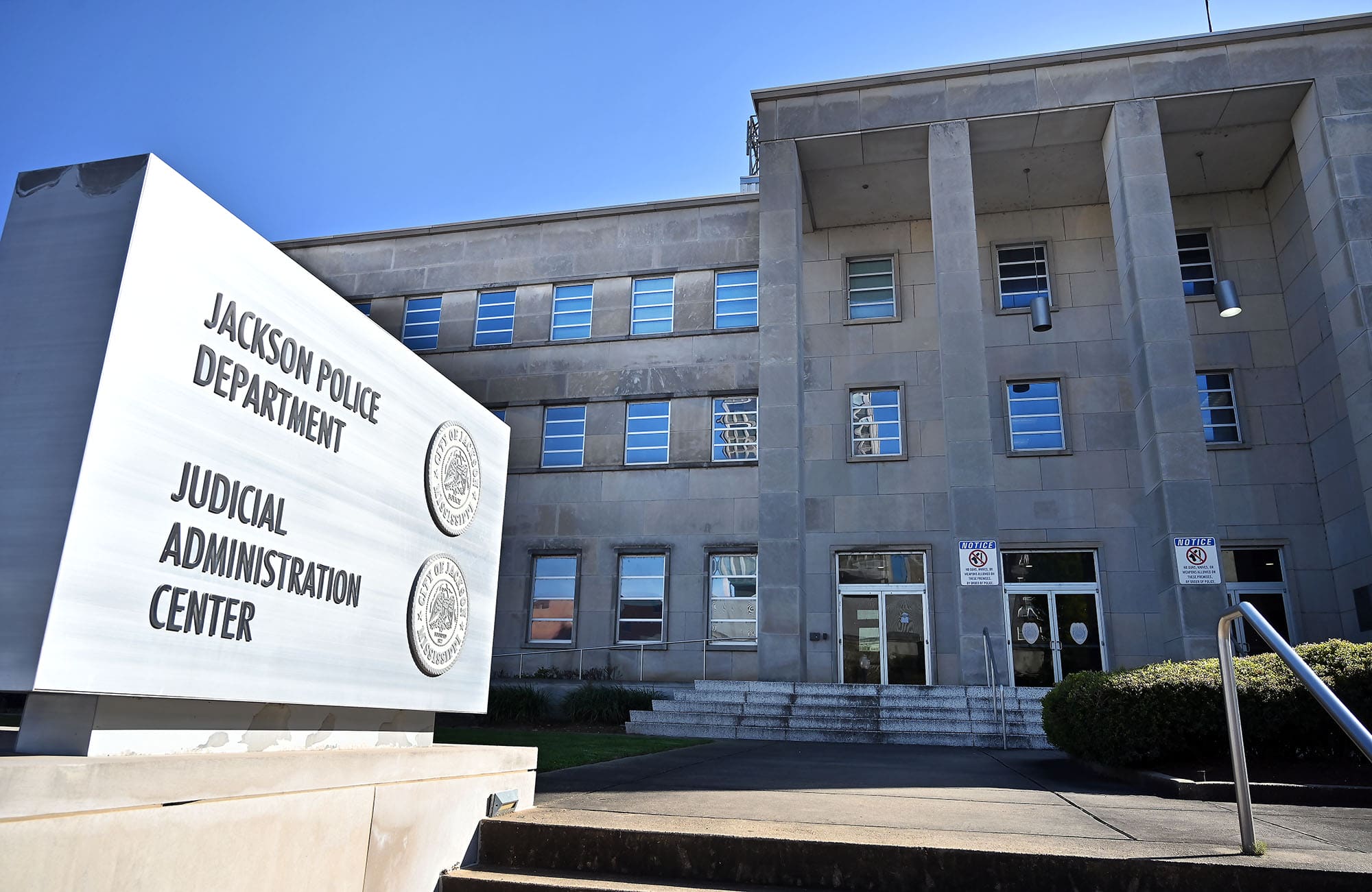
Mississippi’s capital city is a finalist for a U.S. Department of Justice grant that could pump tens of millions of dollars into its police department, a surge of funding that Jackson officials have said would be used to rebuild the city’s forensic laboratory, hire more officers and expand surveillance of violent crime, including using artificial intelligence to track potential criminals.
Other Democratic-led cities, including Charlotte and New Orleans, declined to apply for the grant, which will require participating municipalities to cooperate with certain Trump administration priorities, including immigration enforcement and a ban on public sleeping.
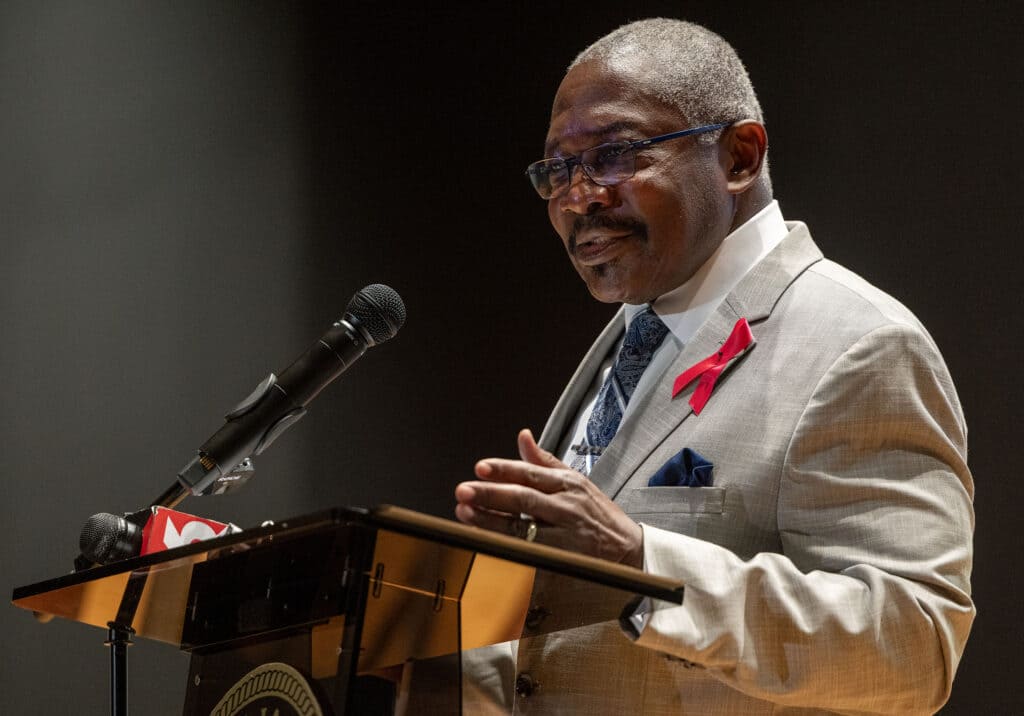
In Jackson, which has some of the highest homicide rates in the nation, Mayor John Horhn said he had not heard from any constituents who are concerned the grant could result in a federal takeover of the Jackson Police Department.
Jackson Mayor John Horhn delivers his State of the City address at the Jackson Convention Complex on Tuesday, Oct. 13, 2026. Credit: Eric Shelton/Mississippi Today
“I haven’t seen one bit of concern or criticism about our going after this grant,” Horhn told Mississippi Today. “In fact, most people are happy to hear that we might be able to get a tremendous amount of resources that can help with crime fighting.”
Jackson is requesting $125 million over three years.
Unlike other federal law enforcement grants, the Model Cities Initiative will be administered through a “cooperative agreement,” giving the DOJ a more active role in implementation.
In a statement, the ACLU of Mississippi called on the city to be transparent with residents about the grant before any agreement is finalized, adding that it was concerned the funding would require JPD to adopt an aggressive approach to policing that could jeopardize Jacksonians’ civil liberties.
“Jackson deserves investments in public safety that build trust, address the root causes of violence, and protect the rights of all residents,” said Lydia Grizzell, the advocacy manager of the ACLU of Mississippi.
Jackson Police Chief RaShall Brackney, who did not respond to an interview request, was invited to brief federal officials on the city’s application on Oct. 1. The DOJ has not yet announced which two to four cities will receive the new Model Cities Initiative grant, part of a federal initiative to “Make America Safe Again.”
In the city’s grant application, which Mississippi Today obtained through a public records request, JPD argued that Jackson’s “violent-crime problem is fundamentally a lack of system capacity.”
The department noted that its officers frequently work in silos. In one example, JPD wrote that even though officers have access to federal ballistics data, the department’s case-management system shows no “leads formally linked to an arrest or conviction,” according to the grant application.
“This reflects a tracking gap, not an absence of investigative value.”
The department proposed spending much of the potential $125 million award on solving these gaps, including creating a specialized gun crimes unit focused on “repeat shooters,” expanding JPD’s network of cameras housed at the Real Time Command Center, and creating a database that would link 911 calls to the addresses of burned-out homes, illegal dumping sites and other code enforcement complaints.
“It is the infrastructure behind Jackson’s vision of becoming ‘The City That Responds Before It Arrives’: seeing the threat, understanding the condition, directing the right resource, and intervening before it becomes the next crime, emergency, or community crisis,” the department wrote.
JPD also proposed using $10 million to fund a victim advocate unit that would “connect victims to advocacy from the first 911 calls,” $10 million to create a reentry council that would monitor “high-risk reentry cases,” and $22 million on rebuilding the forensic center.
“Its current capability is limited to testing green leafy substances,” the city wrote.
The Jackson City Council gave Brackney the authority to apply for the grant earlier this year. The agenda item passed with no discussion.
The city’s grant application was supported by letters from state and local law enforcement officials, including Hinds County Sheriff Tyree Jones, then-Capitol Police Chief Bo Luckey, Mississippi Department of Public Safety Commissioner Sean Tindell, and Mississippi Attorney General Lynn Fitch.
Jackson “provides an opportunity that no other city can replicate to demonstrate that surging personnel and resources and working in partnership across federal, state and local levels can reduce criminal activity, restore law and order, and positively impact the quality of life for residents in high crime jurisdictions,” Fitch wrote in an Aug. 13 letter. “Simply put, Jackson, Mississippi is the best opportunity to provide the underlying hypothesis of the Model Cities Initiative.”
Audio articles are automated for accessibility. Humans wrote and edited the story; however, this audio has not been reviewed for accuracy and may contain errors. Read more about how we use AI to increase access to our reporting.
A Hinds County judge has blocked the state attorney general’s attempt to permanently drop the manslaughter case against a former Capitol Police officer who admitted to killing a 25-year-old Jackson man during a traffic stop.
Hinds County Circuit Judge Faye Peterson ruled the attorney general’s office was showing a “bias” for law enforcement, despite its legal responsibility to prosecute the manslaughter case against the white former officer, Michael Lamar Rhinewalt, for firing the shot that killed Jaylen Lewis, a Black man. After a majority-Black jury deadlocked on whether to convict Rhinewalt at trial last month, the new ruling leaves open the possibility that Rhinewalt could face a second trial and up to 20 years in prison under a future attorney general, once current Republican officeholder Lynn Fitch’s term is up in 2028.
September’s manslaughter trial against Rhinewalt and the other former officer who admitted to shooting at Lewis in self defense, Steven Frederick Jr., marked the first criminal trial from Capitol Police’s record year of shootings in 2022. After the trial ended in an acquittal for Frederick and a hung jury for Rhinewalt, Peterson said she could hold another trial as soon as February.
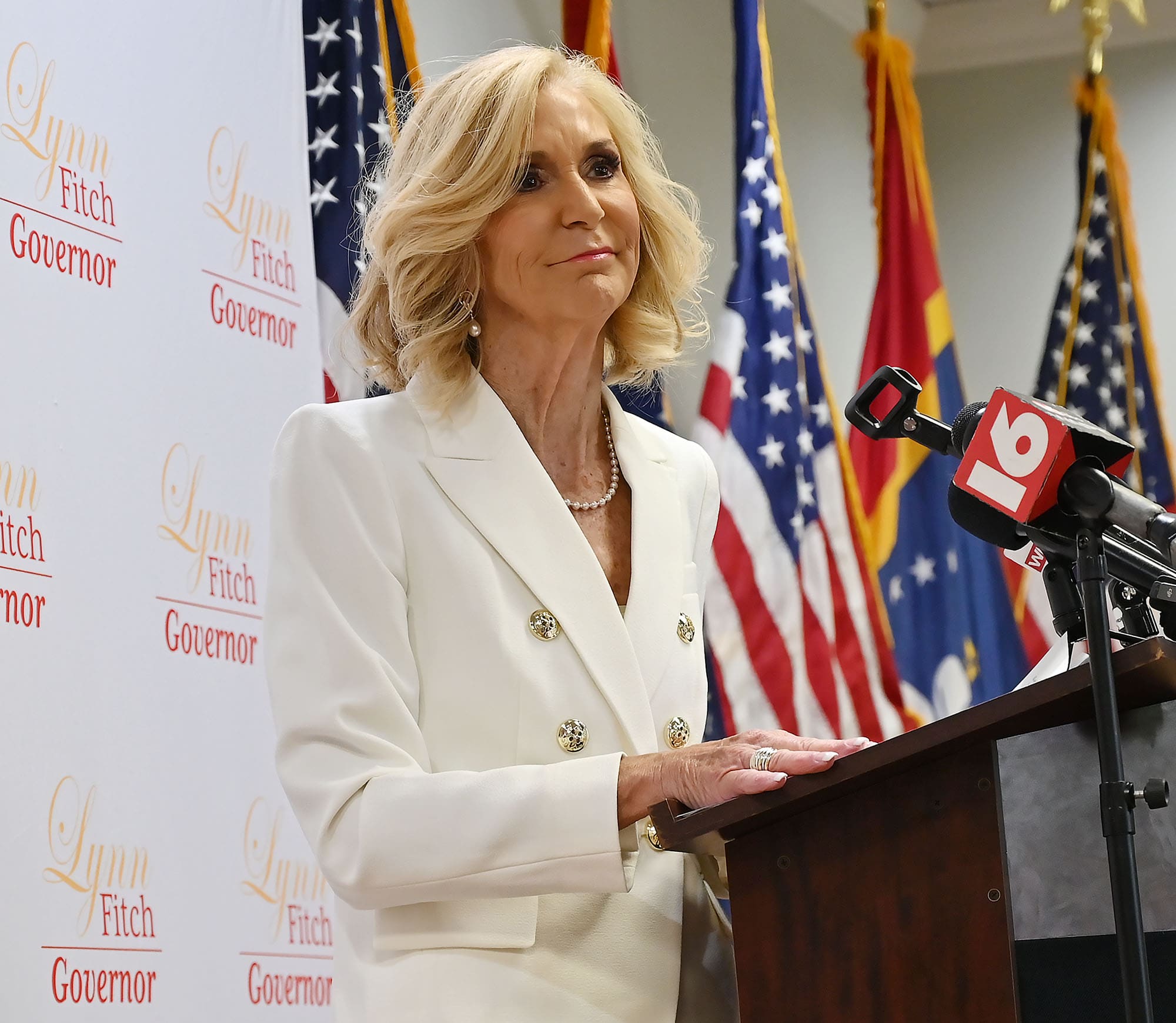
Attorney General Lynn Fitch discusses her 2027 campaign for governor during an event at the Mississippi Republican Party headquarters in Jackson on Wednesday, Aug. 5, 2026. Credit: Vickie D. King/Mississippi Today
But just hours later, the attorney general’s office announced in a press release that it would not put Rhinewalt on trial again, writing that “in the case of a tie, the benefit of the doubt goes to our law enforcement officers.”
In her ruling Wednesday, Peterson criticized the attorney general’s reasoning, stating that Fitch’s office failed to give a substantive basis to “abandon” its oath and duty to keep prosecuting the case, such as “conflicting evidence.”
“The Court does not operate in (a) vacuum and is aware that on the date the case was announced as a mistrial, the Office of the Attorney General announced it would be abandoning its duty to pursue prosecution of this case due to a bias in preference of law enforcement rather than upholding the oath of the office to pursue prosecutions of cases without bias, sympathy or prejudice,” the judge wrote.
The attorney general’s office did not respond to multiple requests for comment. After Peterson rejected the office’s effort to get a permanent dismissal, the attorney general filed an official request Friday for the judge to temporarily drop the case.
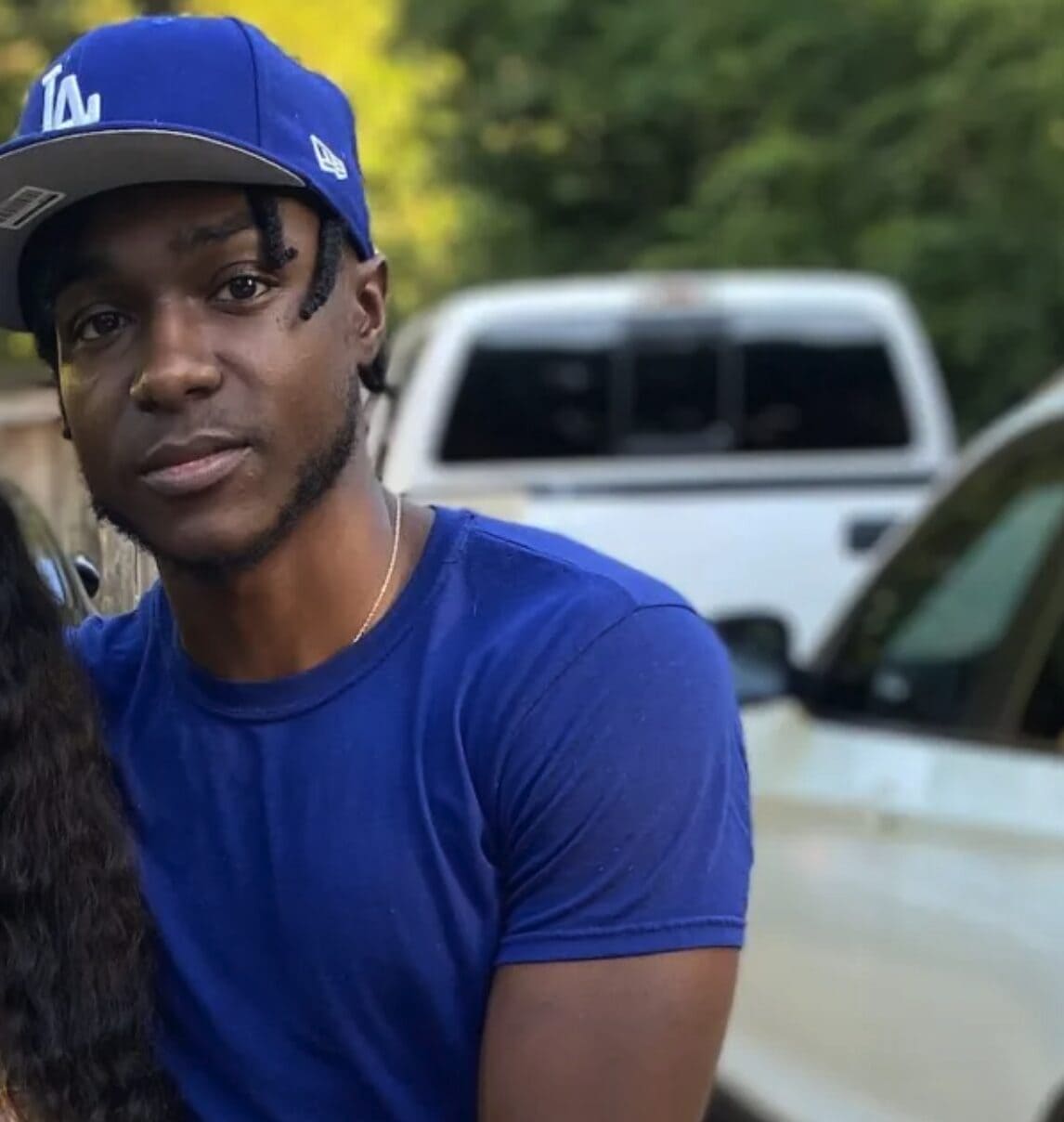
Jaylen Lewis Credit: Courtesy of Arkela Lewis
“The prosecution is bound to administer justice and protect the public by faithfully, fairly and impartially prosecuting crimes without regard to bias, sympathy, prejudice, preference or favoritism,” wrote Luke Williamson, the special assistant attorney general who handled the prosecution. “The prosecution believes we have exercised appropriate and reasonable measures in the prosecution of this case.”
Peterson has not yet ruled on the new request, according to court records.
Arkela Lewis, whose son Rhinewalt killed, thought the case was over. But when she learned from Mississippi Today there was a chance Rhinewalt could face trial again, she said the judge’s ruling gave her “a little bit more faith.”
“It doesn’t give me peace, but I can breathe a little bit knowing that she’s speaking out for my family, for my son,” she said.
Peterson ruled that she would have considered a request to temporarily drop the case, while allowing another prosecutor to take it up in the future. But in its initial request, the attorney general’s office aimed to shield Rhinewalt from prosecution in the manslaughter case forever — an “unnecessary reach” for Fitch’s office, according to Mississippi Christian University law professor Matthew Steffey.
“What that does is it instructs the next attorney general — whoever that is, and no matter what future evidence comes forward — ‘You may not prosecute this officer,’” Steffey said. “It would be a shame to have to tell a victim, ‘We can’t pursue justice because the previous holder of this office made sure to tie our hands.’”
An ‘unnecessary reach’: Rhinewalt’s critics and allies both find fault with AG
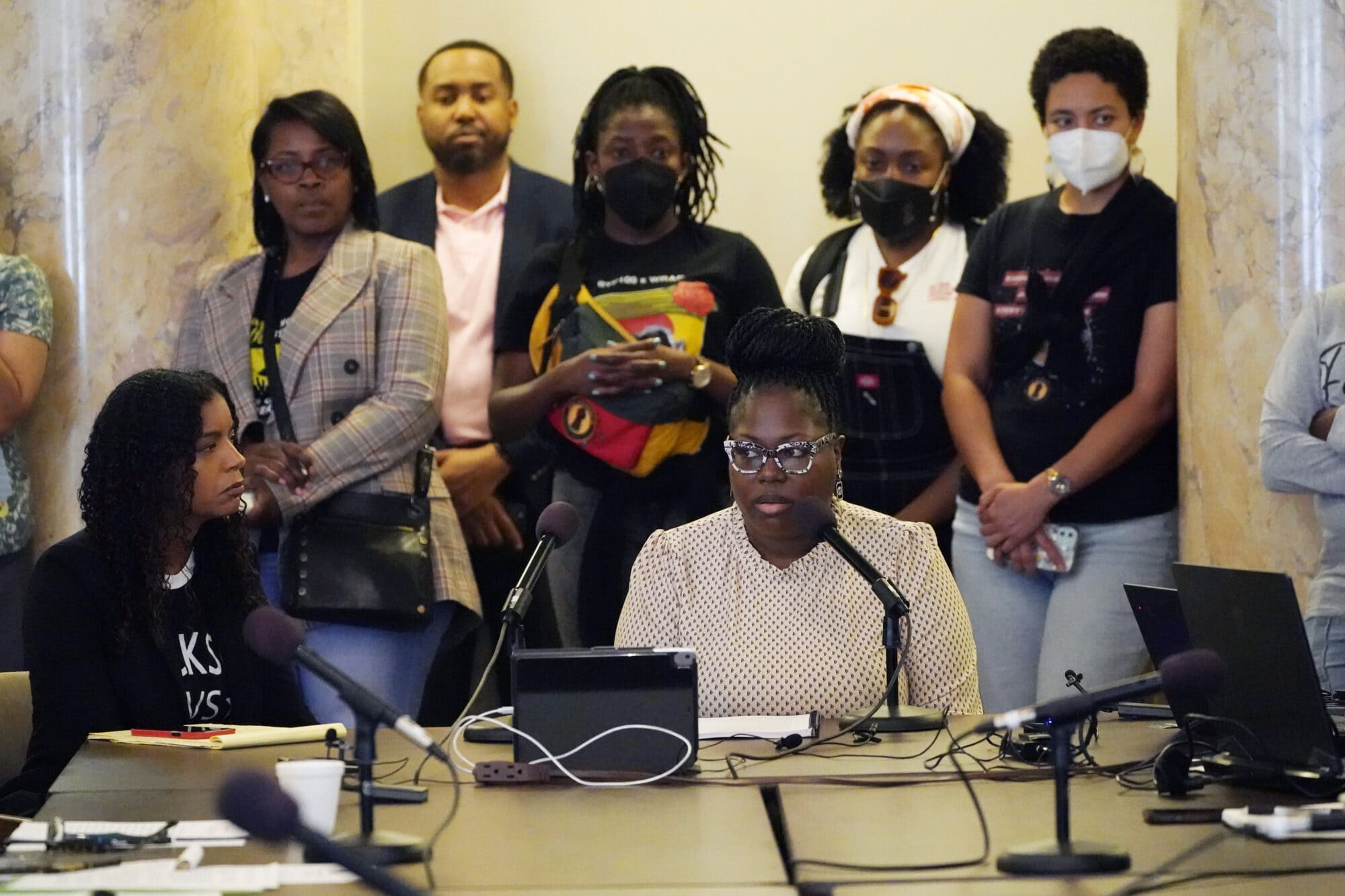
Arkela Lewis, bottom right, mother of Jaylen Lewis, who was shot to death during an encounter with officers of the Capitol Police department, testifies before members of the Jackson delegation of the Mississippi Legislature at the state Capitol in Jackson, Monday, March 6, 2023. Lewis was one of several witnesses who spoke against a bill that would increase state involvement in the Hinds County court system and expand the jurisdiction of Capitol Police inside the city of Jackson. The hearing drew a large number of spectators. (AP Photo/Rogelio V. Solis)
In Mississippi, the attorney general has sole power to prosecute officers for shooting civilians under state law. But both critics and allies of Rhinewalt have found fault with how the attorney general handled the case.
Speaking as Rhinewalt’s friend, Shaun Yurtkuran, a Jackson-based criminal defense attorney and a former prosecutor for the attorney general’s office, has another word to describe the office’s handling of the case: a “mess.”
Since Fitch’s office secured a grand jury indictment in the case last year, Yurtkuran said he has wanted nothing more than for Rhinewalt to finally be free of the case that has “financially ruined” his friend. But he said the attorney general failed to give the judge any valid legal reason for why the case should end forever.
“I don’t fault Judge Peterson because I fault the AG,” Yurtkuran said. “I think they screwed up in the beginning, like indicting him, and even to the end, they couldn’t even do that right.”
In his argument for a permanent dismissal, Williamson justified his request with the jury’s decision to acquit Frederick and the “age” of the case, even though it was the attorney general’s office that waited three years to indict the former officers.
This is not the first time a judge has questioned the fairness of the attorney general’s prosecution of Rhinewalt from his time as a Capitol Police officer with the force’s crime suppression Flex Unit. Another conflict stemmed from an aggravated assault case Rhinewalt faced after prosecutors accused him of shooting Sherita Harris, a Black woman, during an attempted traffic stop a month before he killed Lewis.
The attorney general’s office was prosecuting the aggravated assault case against Rhinewalt while it was also defending him against a $3 million federal lawsuit that Harris filed, which accused the former officer of shooting her in the head and leaving her with “permanent neurological and facial injuries.”
The attorney general’s office argued that, because separate divisions were handling the cases, there was no evidence of “improper influence” on the grand jury that indicted Rhinewalt in Harris’ shooting. But ultimately, the Hinds County circuit judge presiding over the case, Adrienne Wooten, ruled the discrepancy was an unprecedented “conflict of interest which gravely undermines the integrity and fairness of the proceedings.”
The attorney general appointed the office of Lin Carter, the district attorney of Forrest and Perry counties, to take over the prosecution for Harris’ shooting. After a year and a half of delays, Rhinewalt is scheduled to face trial in that case next month.
Rhinewalt in ‘legal purgatory’
Law experts expect that Rhinewalt will be clear from prosecution in the manslaughter case as long as Fitch is attorney general. But Yurtkuran said the judge’s ruling still leaves the former officer in “legal purgatory.”
Steffey said that once Fitch’s term is up at the beginning of 2028, it will be up to the new attorney general to review Rhinewalt’s case and decide whether to put him on trial again. So far, the only name in the race is Republican Sean Tindell, the former public safety commissioner whose department oversees the bureau that investigated Lewis’ killing.
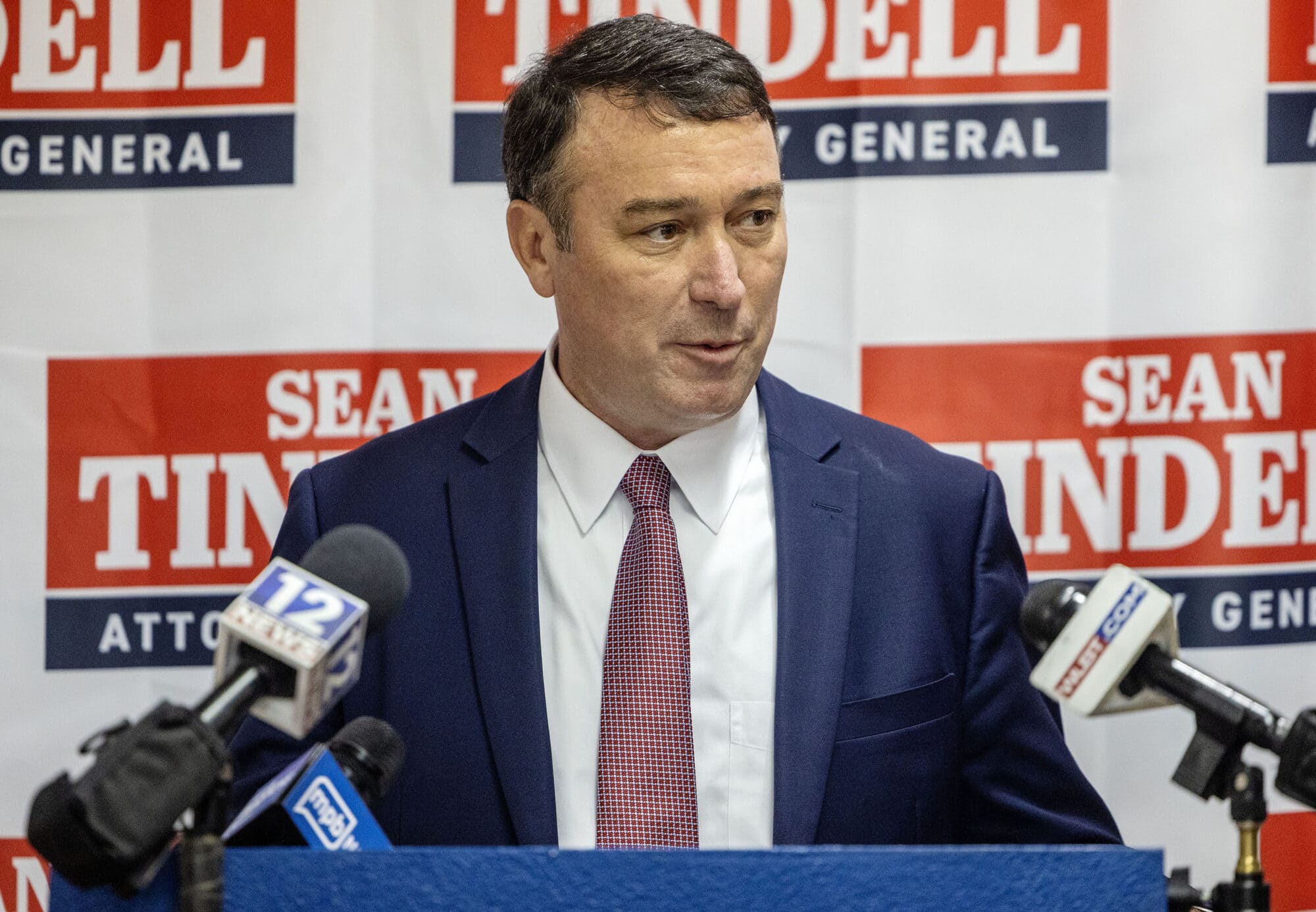
State Public Safety Commissioner Sean Tindell announces his candidacy for attorney general at the Republican Party headquarters in Jackson on Wednesday, Aug. 19, 2026. Credit: Eric Shelton/Mississippi Today
During his tenure over the Department of Public Safety, Tindell also oversaw reforms that gave its law enforcement standards board more power to investigate officer misconduct. He did not immediately respond to a request for comment.
Lewis’ father, William Drake, said the attorney general’s decision against retrying Rhinewalt is a “political” move as Fitch runs for governor in next year’s elections. Fitch’s office has so rarely taken officers to court for shooting at civilians that Drake said the attorney general’s decision to indict Rhinewalt and Frederick for his son’s death already “spoke volumes” to him.
According to Fitch’s office, Lewis’ killing was one of only four times during her tenure when officers shot at civilians that the office did not find to be “justified.”
“For her to go against the grain, it was some light for me in some very dark times,” Drake said. “For her to even indict her own.”
Audio articles are automated for accessibility. Humans wrote and edited the story; however, this audio has not been reviewed for accuracy and may contain errors. Read more about how we use AI to increase access to our reporting.
An old adage in college football is that, on any given Saturday, anything can happen. Anybody can beat anybody.
And that certainly holds true in the current season.
Rick Cleveland
How else to explain these occurrences? On Sept. 26, Florida slaughtered Ole Miss 52-28. On Oct 3, Missouri clobbered Florida 45-17. But on Oct. 17, Ole Miss belted Missouri 31-3.
In a matter of three weeks, Florida whipped Ole Miss by 24 points, and Missouri whipped Florida by 28, yet Ole Miss browbeat Missouri by 28.
It’s enough to make you dizzy. I mean, how does this happen? Team A was 24 points better than Team B, and Team B was 28 points better than Team C. Yet Team C beat Team A by 28 points. This does not compute.
But this is not an anomaly, either. Elsewhere in the SEC this season, Alabama slammed South Carolina by 31 points, 49-18. Tennessee trounced Alabama 26-10, yet South Carolina, just this past Saturday, defeated Tennessee 27-24. You’ll get a headache if you think about it too much.
Take some aspirin, because it’s not just happening in the SEC, either, as we shall see.
Earlier this season, Troy slammed Southern Miss 55-34. It was like men vs. boys. The next week, Louisiana pounded Troy 33-6. But then a week later, this past Saturday, Southern Miss stunned Louisiana 35-31.
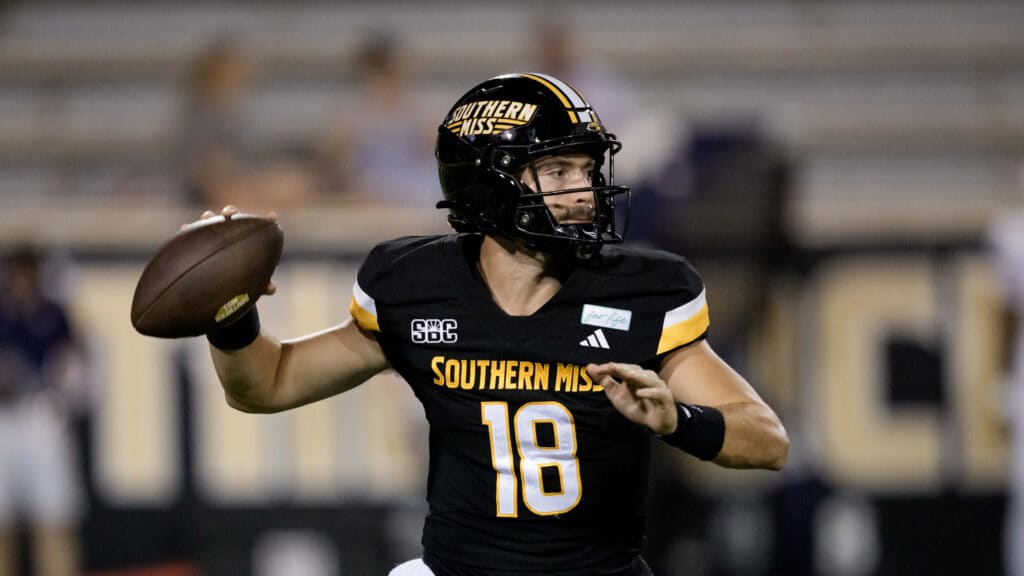
Southern Mississippi quarterback Landry Lyddy (18) throws during an NCAA college football game in Hattiesburg, Miss., Saturday, Sept. 19, 2026. Credit: AP Photo/Matthew Hinton
When results are this disparate, you figure there’s got to be a reason, a common thread. Having reported on college football for six decades or so, I figured that reason was turnovers. Experience tells me that when upsets occur, the turnover differential is most often the reason.
So I went back and looked at the nine results listed above. And I was partially correct. Not once among those nine decisions did the losing team win the turnover battle. In five cases, the winners were at least plus-2 in turnovers, but in the other four games, the turnovers were even.
The one common factor in all nine games? The home team won. Like Dorothy from Kansas once said, over and over, “There’s no place like home.”
In college football, the home team does enjoy a definite advantage. You could look it up. I did. So did renowned college football expert Phil Steele, who found that over the past five seasons home teams have won 64.2% of Division I football games.
Nevertheless, I have heard TV pundits attribute such surprising turn-arounds as those discussed above to the modern version of college football with its unlimited free agency. For most teams, there is now wholesale turnover in rosters between seasons. It stands to reason that especially early in the season coaches are still getting to know the players and vice versa. Players are still learning new formations and new systems. There’s bound to be a period of adjustment when results are uneven and strange things happen.
That might seem like sound reasoning, but it doesn’t explain why this kind of stuff has been happening since long before college players were making more money than college presidents and changing schools faster than girlfriends.
Take 1970, for instance, 56 years ago. Ole Miss beat Alabama 48-23 in Jackson. Alabama beat Mississippi State 35-6 in Tuscaloosa, but State beat Ole Miss 19-14 in Oxford. Furthermore, that same season Ole Miss beat Memphis by 34 points, and Memphis beat Southern Miss by 33 points, yet Southern Miss beat Ole Miss by 16 points. Sounds crazy, but it happened.
And it happened long before that. One hundred years ago, Tulane beat Ole Miss 6-0. And Mississippi State Tulane 14-0. But Ole Miss beat Mississippi State 7-6. Homefield advantage? The home team won only once in those three games.
In college football, there’s only one explanation, which is: Go figure.
Audio articles are automated for accessibility. Humans wrote and edited the story; however, this audio has not been reviewed for accuracy and may contain errors. Read more about how we use AI to increase access to our reporting.
Mississippians seem to be providing contradictory responses to questions asked in a recent poll commissioned by state Republican House Speaker Jason White.
On the one hand, according to the 501 people questioned in the scientific poll, their top priority was inflation or the cost of most retail goods, such as clothes, groceries, gasoline and many other items.
But on the other hand, a majority of those polled say they would favor eliminating the tax on primary residences (or on homesteads) and offset that lost revenue by increasing the sales tax, resulting in those retail items costing more.
Despite those increased costs, 56.6% of poll respondents said they would favor eliminating the property tax on primary residences while increasing the sales tax, while 24.6% opposed the proposal and 18.9% offered no opinion. Inflation was the top priority of 22.2% of respondents, followed by crime and public safety at 19.1% and healthcare at 14.7%. Only 13.5% said reducing taxes was their top priority.
Maybe, the people who identified inflation as the top priority were among the respondents opposed to eliminating the property tax and increasing the sales tax. Maybe, some poll respondents weighed the options and decided they would rather pay no property tax even if it resulted in increased costs for retail items.
No polling explanation offered
The polling firm – Republican-leaning Cygnal – did not attempt to explore that contradiction.
White and his House Republican leadership are currently exploring the option to eliminate the homestead property tax and increase the sales tax.
The option is being considered even though Mississippi has one of the lowest property tax rates in the nation with an effective property tax rate of 0.58% – meaning homeowners on average pay .58% of the value of their home in property taxes.
It should be pointed out that property taxes fund city and county governments and are levied by local officials under the restraints put in place in state law. Property tax rates could be significantly higher in some cities and counties than in others.
Mississippi has a 7% statewide sales tax on most retail items. The sales tax on food recently was reduced to 5%.
Most of the sales tax revenue currently goes to the state, but 18.5% of it is returned to the municipality where the sales tax was collected. Counties currently receive no sales tax revenue.
The sales tax is the largest single source of state revenue, accounting for more than 38% of the general fund used to fund state government services, and it will become even more important thanks to plans to eliminate the income tax. Based on recent legislation, the income tax, which currently accounts for a little less than 28% of the state general fund revenue, will be phased out sometime in the late 2030s.
Sales tax vs. property tax
With Mississippi eliminating the income tax, and already beginning to face budgetary pressures, it will be difficult for the state to provide any money to local governments to offset the potential loss of the homestead property tax. If the Legislature eliminates the property tax, local governments will be dependent on an increase in the sales tax with the revenue going to them.
The homestead tax generates significantly more than $1 billion annually for cities and counties, according to Jason Camp, an extension specialist with the Center for Government and Community Development at the Mississippi State University’s Extension Service.
According to the Tax Foundation, when combining funds for both local and state governments, the sales tax accounts for 35.1% of the total revenue while the property tax accounts for 26.4% and the income tax accounts for 16.8%, though that is steadily declining as the income tax is phased out.
The bottom line is that it will take a significant increase in the sales tax to offset the cities’ and counties’ loss of the homestead property tax revenue. And the result will be Mississippians facing higher prices at retail establishments. How much of an increase is perhaps the key question for House leaders to ascertain before taking any action during the legislative session that begins in January.
Perhaps the question Speaker White should get his pollsters to ask before the 2027 session begins is whether Mississippians want to forgo government services or pay higher prices for retail items or keep paying what is one of the lower homestead property rates in the nation.
Audio articles are automated for accessibility. Humans wrote and edited the story; however, this audio has not been reviewed for accuracy and may contain errors. Read more about how we use AI to increase access to our reporting.
OCEAN SPRINGS — Phil Proctor left South Mississippi to build a career as a professional sculptor, creating large-scale art installations across the country. Two decades later, the Lucedale native has returned to the Mississippi Coast to create sculptures inspired by an artist he has admired since childhood — Walter Anderson.
“Walter Anderson has been sort of a name I’ve known for many years, going back to being a young child and being one of my favorite artists ever because of the content of the work and the naturalism and just the representation of the animals and the way they are drawn,” Proctor said.
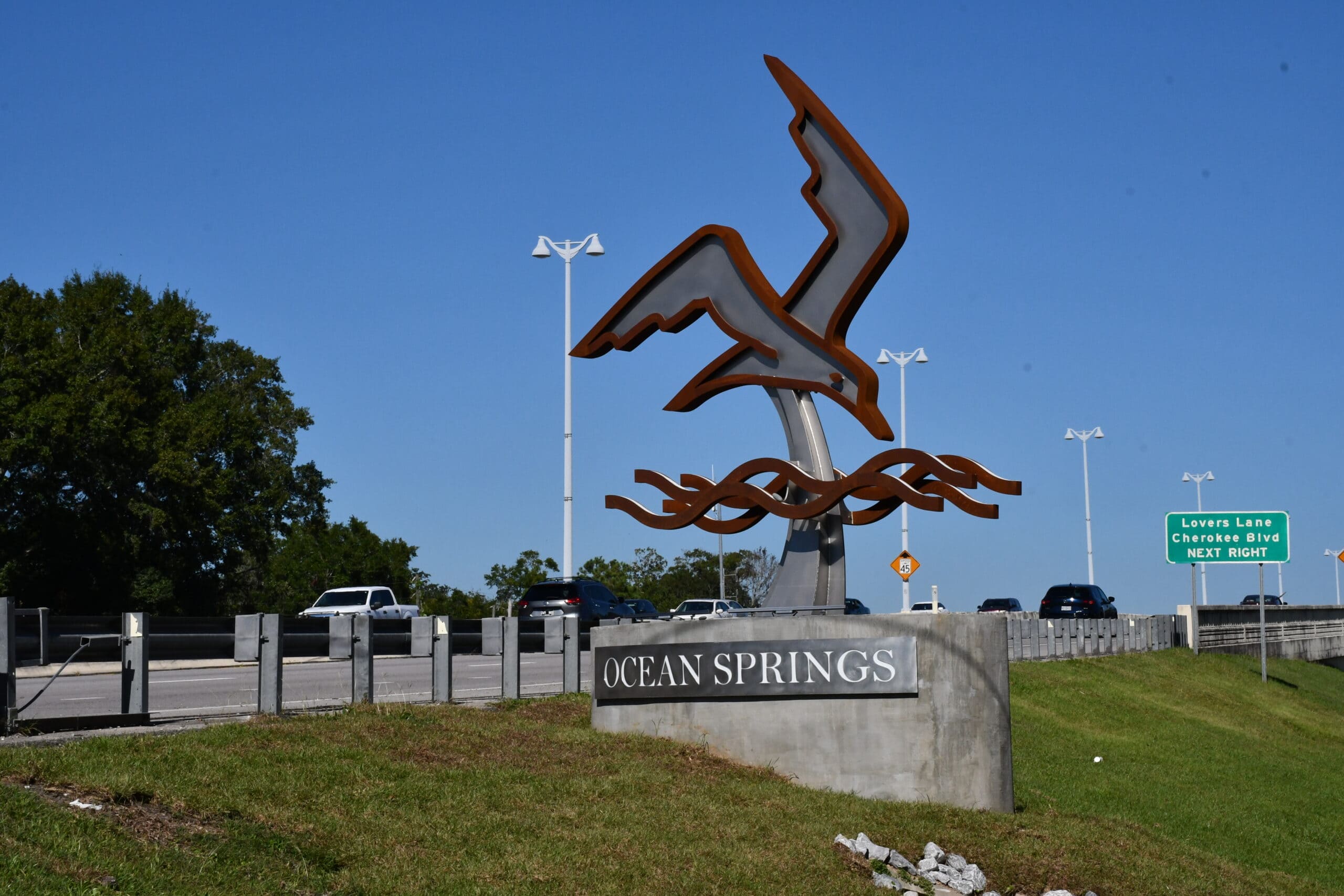
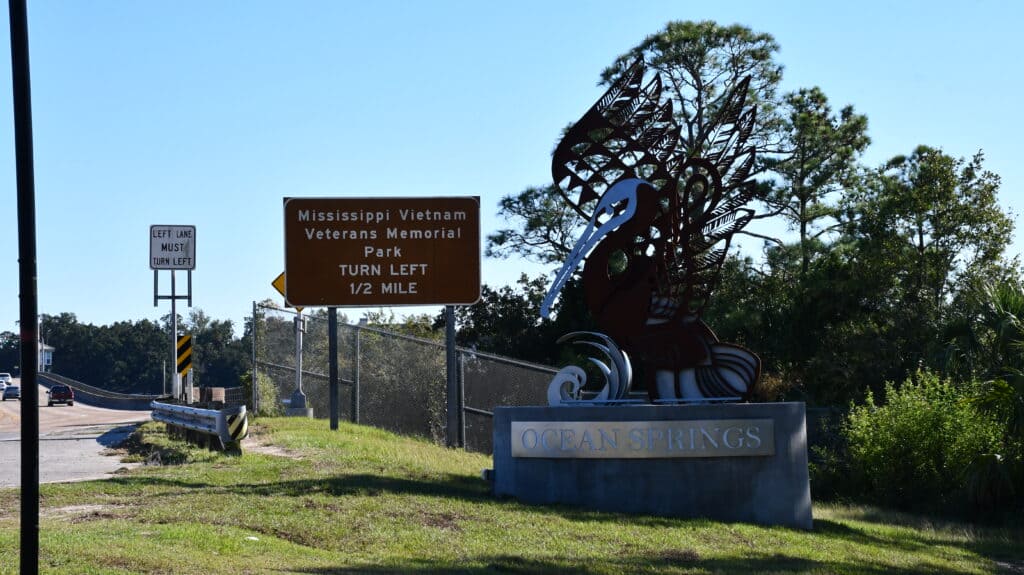
Proctor was chosen to create two sculptures for the Ocean Springs Gateway Sculpture Project, a shearwater bird and a pelican based on Anderson’s work.
From South Mississippi to a career in sculpture
Proctor graduated from the University of Southern Mississippi in 2000 with a bachelor’s degree in fine arts. He later earned a master’s degree in fine arts from East Carolina University before moving to Atlanta.
His path to becoming a full-time artist was gradual.
“Being an artist is — sometimes you gotta hold down a couple of jobs,” Proctor said. “I’d say after about ten years or so, I could leave most of my other kind of work behind and just focus on sculpture professionally full time.”
His work has since taken him across the country, including projects in Arizona, Oklahoma, Florida and Ohio.
“It was really nice to be able to work where I really know a lot of the people,” Proctor said.
Bringing Anderson’s work into the third dimension
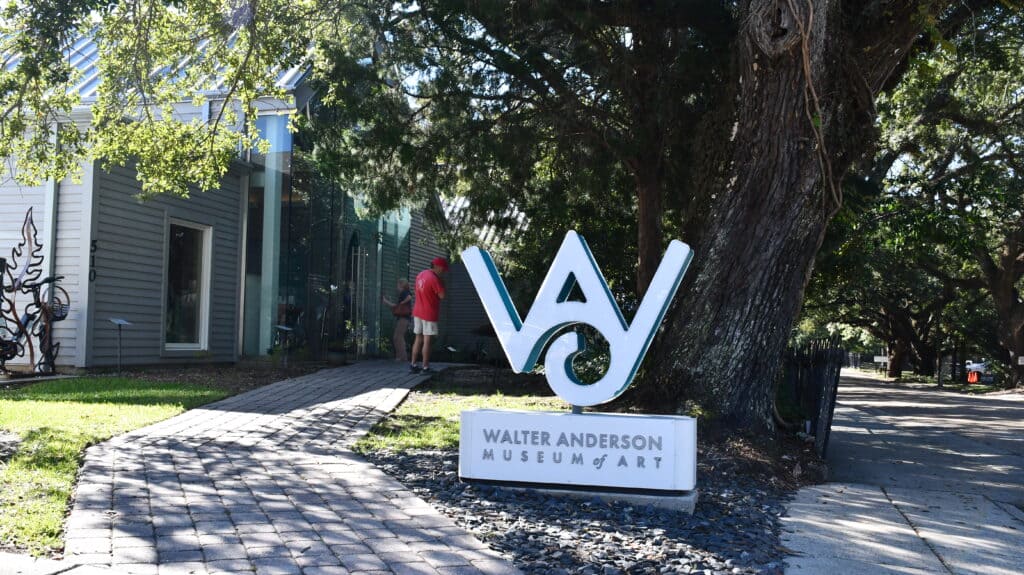
The Walter Anderson Museum of Art viewed its collaboration with sculptor Phil Proctor on the Gateway Sculpture Project as an opportunity to connect contemporary art with the past. Credit: Justin Glowacki/RHCJC
The Gateway Sculpture Project took shape through meetings with residents and community leaders about what best represented Ocean Springs.
Julian Rankin, strategic adviser for the Walter Anderson Museum of Art, said the process led organizers back to Anderson and the city’s artistic tradition.
Proctor was selected after a public call for artist qualifications from Mississippi and the surrounding region. His task was to transform two-dimensional designs based on Anderson’s work into large-scale sculptures.
“Phil got to collaborate, if you will, with Walter Anderson across time and to turn these into three-dimensional sculptures,” Rankin said. “That, I think, was the magic about it.”
“It was really kind of a wonderful experience working what I would describe as a collaboration with Walter Anderson in spirit,” Proctor said.
Design and engineering work began in late 2025, followed by manufacturing around March 2026, Proctor said. The sculptures were unveiled Oct. 1.
Rankin said the overall project took about two and a half years, including public input, design, funding and manufacturing.
More than just art
Pelicans appear throughout Walter Anderson’s artwork. Sculptor Phil Proctor believed the bird’s shape would translate well into a three-dimensional sculpture. Credit: McKenna Klamm/RHCJC
The Gateway Sculpture Project aims to place public art at entrances to Ocean Springs while helping direct visitors downtown.
The project was funded through the Gulf Coast Restoration Fund as part of the Mary C. O’Keefe Cultural Center rehabilitation and signage project.
Rankin said the sculptures are intended to guide visitors toward businesses and bring art into developing areas of the city.
He said the project could serve as an example for other Mississippi communities.
“It’s a model for other cities and areas of the state to say, ‘We could do something like this too,’” Rankin said.
For Proctor, the project also marked a return to his Mississippi roots.
“Being able to work on a project in Mississippi really meant a lot to us,” he said.
Audio articles are automated for accessibility. Humans wrote and edited the story; however, this audio has not been reviewed for accuracy and may contain errors. Read more about how we use AI to increase access to our reporting.
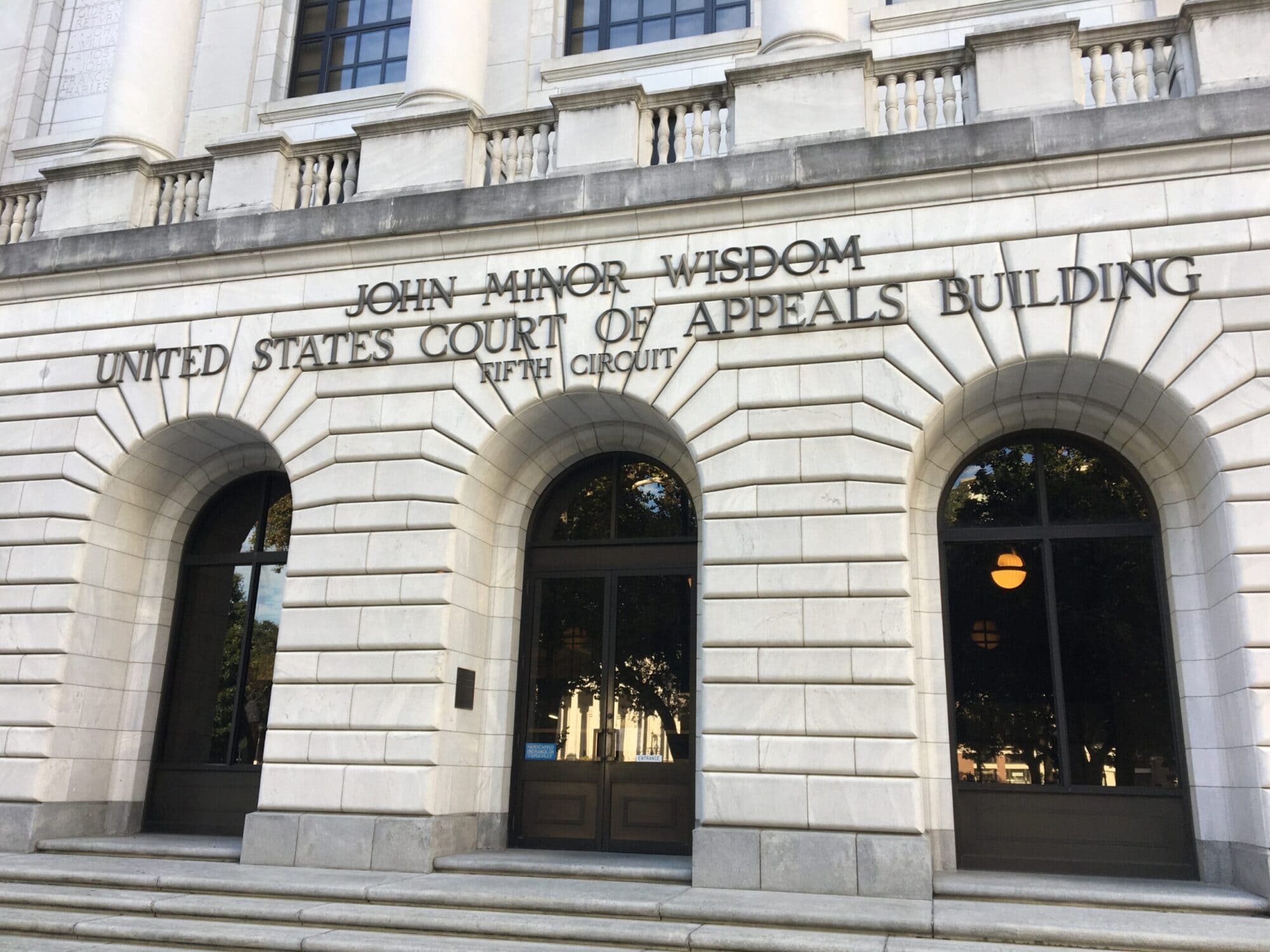
NEW ORLEANS — Immigrants who enter the United States without appointments with immigration officials can be detained indefinitely and are not entitled to bond hearings, regardless of how long they have lived in the country, the 5th U.S. Circuit Court of Appeals ruled Friday.
The 10-7 decision was issued in the case of three immigrant fathers in Texas who were detained without bond. It applies to immigrants who have already entered the U.S., as well as those who will enter in the future, and it has far-reaching implications for the more than 20,000 people held indefinitely in detention centers in Texas, Louisiana and Mississippi – the states in the appeals court district.
Rebecca Cassler, an attorney at the American Immigration Council, who represented the three men, said the ruling is “an affront to the U.S. Constitution.”
“The principle at stake here is simple: if the government wants to detain someone, it has to explain why depriving them of their liberty is necessary. And anyone who is detained has the right to ask a judge for review of that detention,” Cassler said. “Instead, this ruling allows the government to lock people up when detention plainly serves no purpose, and without any way to challenge it.”
Texas, Louisiana and Mississippi hold more than 40% of all ICE detainees by average daily population, making the 5th Circuit the largest jurisdiction for people challenging their confinement as unconstitutional. So far, it continues to be one of only two circuits to have upheld the Trump administration’s mandatory detention policy.
The Supreme Court has agreed to take up a similar case from the 8th Circuit Court of Appeals, which will allow for precedent to be set regarding bond eligibility and indefinite detention for immigrants in removal proceedings. That case is expected to go before the justices early next year.
The 5th Circuit reversed an earlier decision by a panel of three of its own judges, which had granted bond to immigrants in detention after 90 days. The new ruling says people in ICE detention have no constitutional right to due process.
In the majority opinion issued Friday, Judge Cory Todd Wilson wrote that immigrants who have been in the U.S. a long time are still “applicants for admission” and therefore are subject to mandatory detention without bond.
The seven judges who dissented agreed that constitutional rights, including the right to liberty, are available to all people present in the United States. Judge Leslie H. Southwick wrote in dissent, “statutory admission status does not decide when aliens gain due process rights. The Constitution, after all, is supreme, with statutes’ needing to conform to its dictates, not the Constitution to statutes.”
James Percival, general counsel for the Department of Homeland Security, praised the majority’s ruling.
“Big win in the Fifth Circuit on mandatory detention for illegal aliens, a principle codified in 1996 legislation but ignored by the deep state for decades,” Percival said Friday.
The three-judge panel had ruled in July that the Trump administration’s policy of denying certain due process rights to immigrants who entered the United States without formal appointments with immigration officials, no matter how long they had resided in the country, was unconstitutional. The panel ruled that the government must hold bond hearings for immigrants arrested within the U.S. within 90 days of their detention.
However, 10 days later, and with no official prompting from the federal government, the entire court decided to re-consider the case. The announcement of the hearing paused the relief that the panel of judges had granted to the three men. The 5th Circuit is generally regarded as one of the most conservative in the nation.
In 2025, constitutional petitions by immigrants pleading to be released began inundating federal courts across the country, after the Trump administration stopped a long practice of providing bond hearings to those who had lived in the U.S. for years. To date, more than 80,000 such petitions have been filed nationally. About a quarter of these have been filed within the 5th Circuit.
Federal district courts in Texas, Louisiana and Mississippi will continue to have the power to grant habeas corpus petitions on a discretionary basis, but Friday’s ruling “would foreclose nearly all of those petitions from being granted on constitutional grounds,” Cassler said.
Until the Trump administration ramped up its immigration crackdown in 2025, federal courts for decades had distinguished between people arrested at the U.S. border and those who had built lives in the country. The latter would automatically receive bond hearings, which would allow an immigration judge to decide whether the person was dangerous or posed a flight risk.
Then Trump’s second presidential term began and ICE detention populations exploded. In August, ICE boasted that it had broken its own record of the number of people it had arrested, as populations inside detention facilities across the South swell, triggering complaints of crowding. Andrei Zykov, a detainee at the Adams County Correctional Center in Mississippi, said Thursday that the facility designed to hold 2,200 people has been holding more than 2,600 for weeks, based on the number of meals kitchen workers were asked to prepare.
The 5th Circuit’s latest decision has effectively sealed the path for hundreds of them who hoped to be released while immigration judges decided whether they could remain in the U.S.
Attorneys for American Immigration Council and the National Immigration Project, who represent the three men, argue that the case, as well as the issue of habeas corpus, is about personal liberty, a constitutional right that they say is granted to all people within the United States.
The government continues to argue that immigrants who entered the country without those formal appointments, which is called entering without inspection, are not entitled to certain constitutional rights no matter how long they have lived in the U.S., because their very presence in the country is unlawful.
Illegally entering the U.S. is, in most cases, a misdemeanor. Cassler said the government is trying to rob immigrant detainees of rights that are guaranteed even to violent criminals.
“When people murder someone and they’re put on trial for it, the government’s interests are at their strongest,” Cassler said. “They want to protect the community. They want to make sure that that person doesn’t go kill someone else. And even in those cases, that person has very robust rights to due process with regard to their pretrial custody. Violating the law doesn’t take away your constitutional rights.”
Robert Stewart of Verite News contributed reporting.
Audio articles are automated for accessibility. Humans wrote and edited the story; however, this audio has not been reviewed for accuracy and may contain errors. Read more about how we use AI to increase access to our reporting.
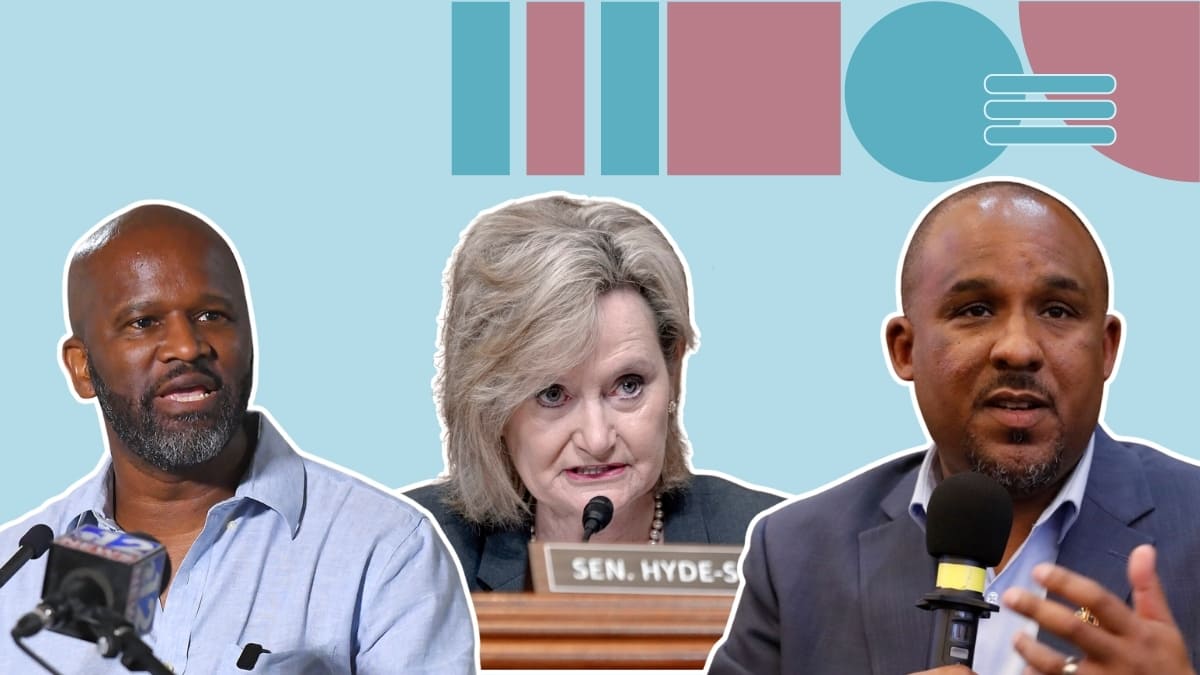
Republican Attorney General Lynn Fitch said Friday that Scott Colom, the Democratic nominee for U.S. Senate, likely violated state law with a digital ad that featured an artificial intelligence-generated depiction of Republican Sen. Cindy Hyde-Smith running away from reporters.
Colom told Mississippi Today he would delete the post because he didn’t want Fitch to launch litigation with taxpayer money. That came after Fitch sent Colom a complaint letter demanding that he remove that ad from his social media accounts. If he did not, the complaint said, the attorney general’s office could file an injunction against him.
“As violations of this election integrity law can carry criminal penalties, Attorney General Fitch has also asked Scott Colom and his campaign to preserve all records related to this matter so as not to obstruct justice,” the statement reads.
In a statement, Colom said that Hyde-Smith is “clearly desperate” and that she and her allies are “once again trying to weaponize the justice system to distract from the real issues, which is that she has sold out our farmers, sold out our small businesses, and sold out our families.”
“Clearly this was parody, maybe too close to home because she knows she does love to hide from her own constituents and reporters,” Colom said.
Fitch’s threat is the latest salvo between Colom’s campaign and the state GOP in a race that has generated national attention and millions of dollars from national party interests leading up to the Nov. 3 election. National pundits are saying the Mississippi race, initially taken for granted by Republicans, is in play.
The complaint follows a letter that Mississippi GOP Chairman Mike Hurst sent to Fitch asking her to launch an investigation and criticizing the Colom campaign for not labeling the content as AI-generated.
After a rally with former Vice President Kamala Harris on Thursday, before Fitch had acceded to Hurst’s request to investigate the matter, Colom said Republicans were mounting a coordinated attack to distract from his campaign’s increasing momentum. He pointed out that the ad has been up for weeks, yet Hurst and Fitch were first opining on the matter 11 days before the election.
“They understand that I’m a threat. Mike Hurst does this all the time. Every time somebody gets competitive, they try to weaponize the justice system to intimidate their opponents,” Colom said. “I thought they weren’t snowflakes. You’re telling me they can’t take a joke?”
If Fitch does pursue legal action, it would be a rare instance of her office enforcing campaign laws.
During the 2023 statewide election cycle, Lt. Gov. Delbert Hosemann claimed for months that his Republican primary challenger, state Sen. Chris McDaniel, violated campaign finance laws by accepting more than the state’s legal limit from corporations.
Several Mississippi Republicans agreed that it was a clear-cut example of a campaign-finance law violation, but Fitch later declined to pursue any action against the campaign or the leaders of a political action committee involved in the donations.
Her reluctance to investigate or prosecute alleged campaign finance violations prompted other state leaders to call for reform and more enforcement. Most of those attempts have failed in the Legislature.
Hurst and Fitch issued similar statements about a Democrat close to a competitive election. Fitch shortly before last year’s elections said she was investigating former state Rep. Sonya Williams Barnes, the Democratic nominee for mayor of Gulfport, over allegations that residents had received meal vouchers in exchange for voting. No charges were filed against Williams Barnes.